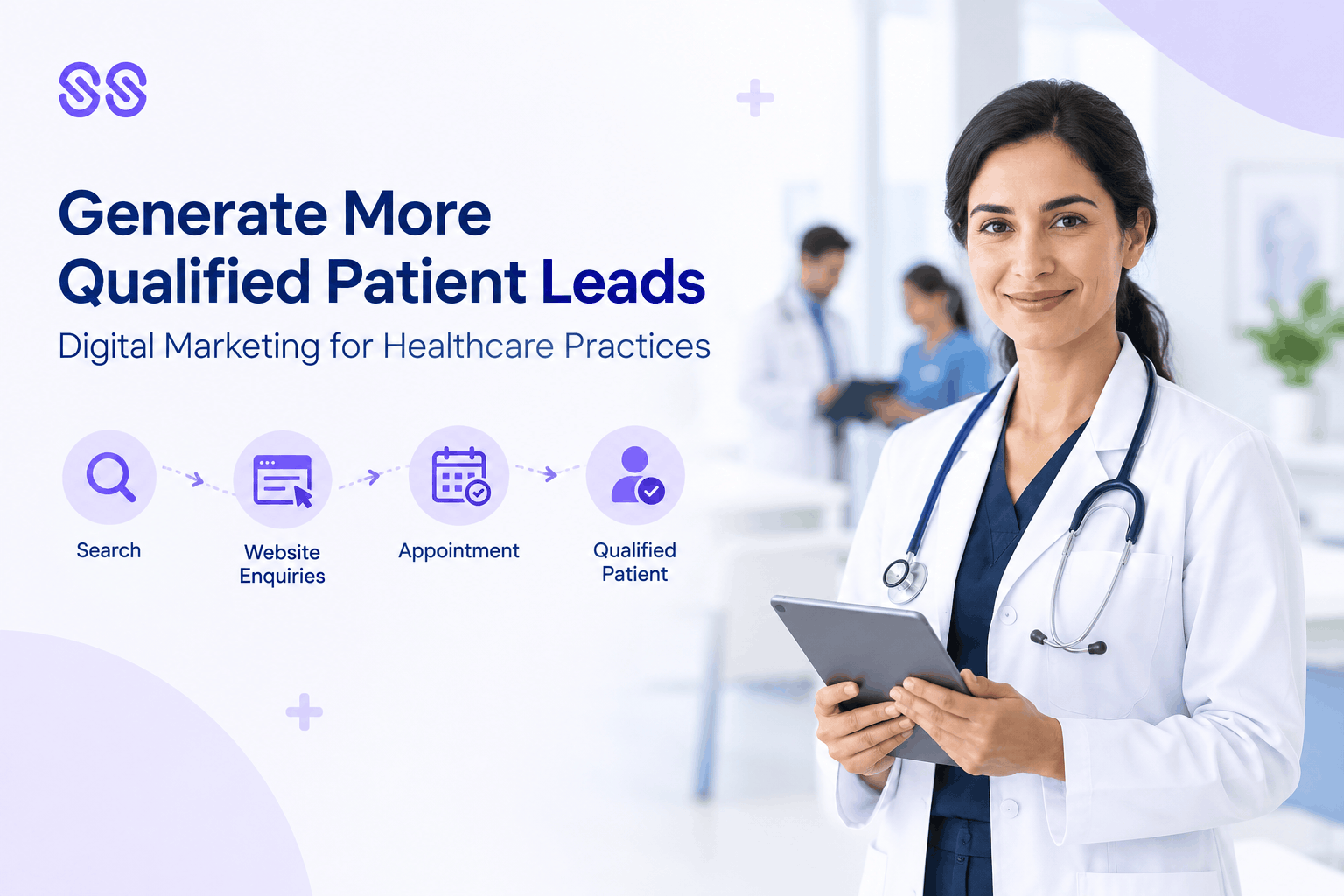
For many medical practices, getting more website visitors is not the real challenge. The bigger challenge is attracting the right people—potential patients who need the services the practice provides and are genuinely interested in taking the next step.
This is where healthcare lead generation becomes an important part of digital growth.
A strong digital marketing strategy can help healthcare practices reach potential patients through search engines, Google Maps, paid advertising, social media, content and other online channels. But generating a large number of enquiries does not automatically mean a practice is generating valuable leads.
The focus should be on attracting relevant, high-intent patients and creating a clear path from their first online interaction to an enquiry or appointment.
Effective medical lead generation therefore combines visibility, trust, patient education, conversion optimisation and consistent follow-up.
What Is Healthcare Lead Generation?
Healthcare lead generation is the process of attracting potential patients and encouraging them to take a meaningful action, such as:
- Calling a medical practice
- Requesting an appointment
- Completing a contact form
- Submitting an enquiry
- Requesting a consultation
- Sending an enquiry through an approved messaging channel
- Booking an online consultation where available
A visitor becomes a potential lead when they demonstrate an identifiable interest in receiving information or services from the healthcare organisation.
However, not every lead has the same value.
Someone searching for general information about a medical condition is different from someone actively looking for a specialist and requesting an appointment.
That distinction is critical when building a medical lead generation strategy.
Read More - Best Digital Marketing Strategies for Ophthalmology Clinics
Why Qualified Leads Matter More Than Lead Volume
A practice can generate dozens of enquiries and still struggle to grow if most leads are irrelevant.
For example, enquiries may come from people who:
- Live outside the practice's service area
- Are looking for a service the practice does not provide
- Are only seeking general information
- Cannot be reached
- Are looking for significantly different pricing
- Are not ready to make an appointment
A better approach is to measure qualified patient leads.
A qualified lead generally has a reasonable match between the patient's needs and the practice's services, location and availability.
This means healthcare marketing should focus on:
Relevant traffic → relevant enquiries → qualified leads → appointments
rather than simply:
More traffic → more forms
Build a Digital Marketing Strategy Around Patient Intent
One of the most important principles in digital marketing for healthcare is understanding what potential patients are trying to accomplish when they search.
Different searches represent different stages of the patient journey.
Informational intent
Examples include:
- What causes chronic back pain?
- What are the symptoms of arthritis?
- How does physiotherapy work?
- What happens during a dental implant procedure?
These searches are generally educational.
They can be addressed through healthcare blogs, treatment guides, FAQs and patient education resources.
Consideration intent
Examples include:
- Best treatment for knee pain
- Physiotherapy or surgery for shoulder pain
- How to choose an orthodontist
- What should I ask a dermatologist?
These searches indicate that the person may be evaluating options.
Detailed treatment content, specialist profiles and service pages can help.
High-intent searches
Examples include:
- Orthopaedic specialist near me
- Dentist in [location]
- Book a physiotherapy consultation
- IVF clinic near me
- Dermatologist appointment
These searches can be particularly valuable for lead generation because they often indicate stronger commercial or appointment intent.
Use Healthcare SEO to Capture Organic Leads
Healthcare marketing should include a strong organic search strategy.
Healthcare SEO can help practices appear when potential patients search for relevant services, treatments, conditions and providers.
Important areas include:
- Keyword research
- Technical SEO
- Service page optimisation
- Local SEO
- Healthcare content
- Doctor profile optimisation
- Internal linking
- Structured data
- Conversion optimisation
The objective should not be to rank for every possible healthcare keyword.
Instead, focus on searches that are relevant to the practice's services, locations and target patients.
Create strong service pages
Service pages are often among the most valuable pages for medical lead generation.
A service page should clearly explain:
- What the service is
- Who it may be relevant for
- What the consultation or treatment involves
- Who provides the service
- Where it is available
- Important considerations
- Frequently asked questions
- How to enquire or book
These pages can target high-intent searches while giving potential patients the information they need before contacting the practice.
Use Local SEO to Generate Nearby Patient Leads
For many healthcare organisations, location matters.
A patient looking for a dentist, physiotherapist, dermatologist or specialist may prefer a provider within a convenient distance.
This makes local search an important part of healthcare lead generation.
Key areas include:
- Google Business Profile optimisation
- Accurate business information
- Local service pages
- Location-specific content
- Patient reviews
- Consistent NAP information
- Local citations
- Google Maps visibility
The practice should make it easy for potential patients to understand where it is located, which services are available and how to get in touch.
Use Google Ads to Capture High-Intent Patients
Organic search can take time to develop. Paid search can provide immediate visibility for selected high-intent queries once campaigns are approved and running.
Google Ads can be used to promote specific services such as:
- Dental implants
- Physiotherapy
- Orthopaedic consultations
- Dermatology
- IVF services
- Cosmetic procedures
- Specialist consultations
The most effective campaigns usually have a clear relationship between the keyword, advertisement and landing page.
For example:
Search: "knee specialist near me"
Ad: Orthopaedic Knee Specialist – Consultations Available
Landing page: Knee Specialist / Orthopaedic Consultation
This alignment creates a more relevant experience than sending every visitor to the homepage.
Create Landing Pages That Convert Healthcare Traffic
A website visitor will not necessarily become a lead simply because they arrive on a service page.
The page needs to make the next step clear.
A healthcare landing page can include:
- Clear service headline
- Concise explanation of the service
- Relevant doctor information
- Professional credentials
- Clinic location
- Appointment information
- Patient-focused FAQs
- Clear phone number
- Contact form
- Appointment CTA
The page should answer important questions without overwhelming the visitor.
At the same time, avoid aggressive claims such as guaranteed outcomes or unsupported statements about being the "best" provider.
Trust is more valuable than exaggerated marketing language.
Use Content Marketing to Build Trust Before the Enquiry
Not every patient is ready to contact a practice immediately.
Some may spend days or weeks researching their condition or treatment options.
This is where healthcare content can support the patient journey.
Useful content can answer questions such as:
- When should I see a specialist?
- What are the common causes of this condition?
- What happens during the first consultation?
- What treatment options are available?
- What should I ask my doctor?
- How should I prepare for an appointment?
- What factors can affect treatment decisions?
This type of content can introduce potential patients to a practice before they are ready to convert.
Make E-E-A-T a Core Part of Healthcare Marketing
Healthcare information can influence important personal decisions, which makes credibility especially important.
E-E-A-T—Experience, Expertise, Authoritativeness and Trustworthiness—should be reflected throughout the website and content strategy.
Demonstrate relevant expertise
Doctor and specialist profiles should clearly communicate appropriate qualifications, areas of practice and professional experience.
Identify content authors and reviewers
Where appropriate, medical content should identify the author and/or qualified reviewer.
Use reliable information
Clinical claims should be supported by appropriate sources where necessary.
Keep information current
Review outdated medical information, provider details, service availability and references regularly.
Be transparent
Clearly communicate the practice's location, services, contact information and appointment process.
Healthcare lead generation should never depend on misleading claims, fabricated testimonials or unrealistic promises.
Improve Your Doctor Profiles
Doctor profiles can play an important role in medical lead generation.
Potential patients often want to know who will be responsible for their care before making contact.
A useful doctor profile can include:
- Name and professional title
- Qualifications
- Areas of practice
- Relevant clinical interests
- Professional experience
- Professional memberships where applicable
- Languages spoken where relevant
- Consultation locations
- Appointment information
The information should be factual and easy for patients to understand.
Use Patient Reviews as a Trust Signal
Reviews can influence how potential patients evaluate a healthcare practice.
A strong reputation strategy should focus on encouraging authentic feedback from patients while complying with applicable laws, professional standards and platform policies.
Practices should never create fake reviews or manipulate patient feedback.
When genuine reviews are available, they can help potential patients understand aspects of the patient experience.
Reviews should complement—not replace—professional credentials and accurate healthcare information.
Make Phone Calls and Forms Easy
A common problem in digital marketing for healthcare is making potential patients work too hard to contact the practice.
Contact options should be easy to find.
Depending on the practice, this could include:
- Click-to-call phone numbers
- Appointment forms
- Online booking
- Contact forms
- Appropriate messaging options
- Location and directions
On mobile devices, phone numbers should be easy to tap.
Forms should ask only for information that is necessary at the initial enquiry stage and should be handled in accordance with applicable privacy and data-protection requirements.
Read More - Best Website Features for Modern Dental Clinics
Follow Up Quickly and Consistently
Generating a lead is only the beginning.
If enquiries are not handled properly, even a successful marketing campaign can produce poor results.
Practices should establish a clear process for:
Receiving the enquiry
Recording the source
Responding appropriately
Understanding the patient's request
Determining whether the enquiry matches the service
Scheduling the appropriate next step
Tracking the outcome
Marketing performance should ultimately be connected to what happens after the lead enters the practice.
Track the Source of Every Lead
A strong healthcare lead generation strategy requires measurement.
Track where enquiries originate whenever practical.
Potential sources include:
- Organic search
- Google Ads
- Google Maps
- Social media
- Direct traffic
- Referral websites
- Other paid campaigns
Useful metrics include:
- Website enquiries
- Phone calls
- Appointment requests
- Qualified leads
- Cost per lead
- Cost per qualified lead
- Appointment conversion rate
- Landing-page conversion rate
- Organic conversions
- Paid search conversions
This allows practices to identify which channels are producing meaningful outcomes.
Optimise for Qualified Patient Leads, Not Just Traffic
High traffic numbers can look impressive but may have limited business value.
Suppose one page receives 5,000 monthly visitors but generates very few relevant enquiries, while another page receives 500 visitors and produces 30 qualified leads.
The second page may be much more valuable to the practice.
This is why healthcare marketing should focus on the relationship between:
Visibility → Relevant traffic → Enquiries → Qualified leads → Appointments
The objective is to improve the quality of the entire funnel.
Combine SEO, PPC and Content Marketing
The strongest digital marketing for healthcare strategies rarely rely on one channel.
Each channel can support a different part of the patient journey.
Healthcare SEO
Builds long-term organic visibility and captures relevant searches.
Google Ads
Targets selected high-intent searches and can provide immediate paid visibility.
Content marketing
Answers patient questions and supports trust.
Local SEO
Helps practices become visible to patients searching within their service area.
Conversion optimisation
Turns relevant website visitors into enquiries.
Reputation management
Supports trust when potential patients compare providers.
Together, these channels create a more complete acquisition system.
Read More - Digital Marketing for Doctors: Complete 2026 Guide to Patient Acquisition
Build Topic Clusters Around Your Most Valuable Services
Healthcare websites can strengthen their organic visibility by creating connected topic clusters.
For example, a physiotherapy practice could build a cluster around back pain:
Core service page:Back Pain Physiotherapy
Supporting content:
- Common Causes of Lower Back Pain
- When Should You See a Physiotherapist for Back Pain?
- Exercises for Back Pain: What to Know
- Physiotherapy for Sciatica
- How Long Does Back Pain Physiotherapy Take?
- What to Expect During a Physiotherapy Assessment
Internal links can connect these resources to the main service page.
This helps patients navigate from educational content towards relevant services.
Common Healthcare Lead Generation Mistakes
Focusing only on website traffic
Traffic does not automatically translate into patients.
Targeting overly broad keywords
Broad keywords may attract visitors who have little connection to the practice's services or location.
Using one landing page for everything
Different services often require different messaging and information.
Ignoring mobile users
A significant proportion of healthcare searches happen on mobile devices. Contact and booking options should work well on smaller screens.
Making exaggerated claims
Healthcare organisations should avoid guarantees and unsupported superiority claims.
Ignoring lead quality
A large number of low-quality enquiries can consume staff time without producing meaningful appointments.
Failing to track conversions
Without reliable measurement, it becomes difficult to know which marketing activities actually contribute to patient acquisition.
A Practical Healthcare Lead Generation Framework
Medical practices can build their strategy using the following process.
Step 1: Identify priority services
Determine which services and treatments are most important for growth.
Step 2: Research patient search behaviour
Identify relevant informational, commercial and high-intent queries.
Step 3: Strengthen core website pages
Optimise service, doctor, location and contact pages.
Step 4: Build useful content
Answer genuine patient questions and address information gaps.
Step 5: Improve local visibility
Optimise Google Business Profile and other relevant local signals.
Step 6: Launch targeted paid campaigns
Use Google Ads for appropriate high-intent services and locations.
Step 7: Improve conversion paths
Make calls, forms and appointment options easy to find.
Step 8: Implement lead tracking
Connect marketing activity with actual enquiries and appointments.
Step 9: Evaluate lead quality
Identify which channels and campaigns generate qualified patients.
Step 10: Continuously optimise
Improve keywords, content, landing pages, advertisements and follow-up processes based on actual performance.
How to Build a Sustainable Patient Lead Generation System
Effective medical lead generation should not depend on one campaign or one source of traffic.
A sustainable system combines:
Search visibility + useful content + trust + conversion optimisation + lead tracking + consistent follow-up
SEO can build long-term visibility.
Paid search can capture high-intent demand.
Content can educate potential patients.
Local SEO can help nearby patients discover the practice.
Conversion optimisation can make it easier to enquire.
Measurement can show which activities are actually producing qualified leads.
When these elements work together, healthcare marketing becomes a connected patient acquisition system rather than a collection of separate campaigns.
Conclusion
Generating more healthcare leads is not simply about attracting more visitors to a website.
The real objective is to attract relevant potential patients, earn their trust and make it easy for them to take an appropriate next step.
A strong healthcare lead generation strategy brings together healthcare SEO, paid advertising, local search, content marketing, conversion optimisation and lead tracking.
The process can be viewed simply:
Reach → Educate → Build Trust → Convert → Qualify → Follow Up → Measure
When each stage is properly connected, medical practices can move away from chasing traffic and focus instead on building a more sustainable source of qualified patient enquiries.
The most effective digital marketing for healthcare is not necessarily the strategy that produces the highest number of clicks or forms. It is the strategy that consistently connects the right patients with the right healthcare services while providing accurate information and a trustworthy experience.