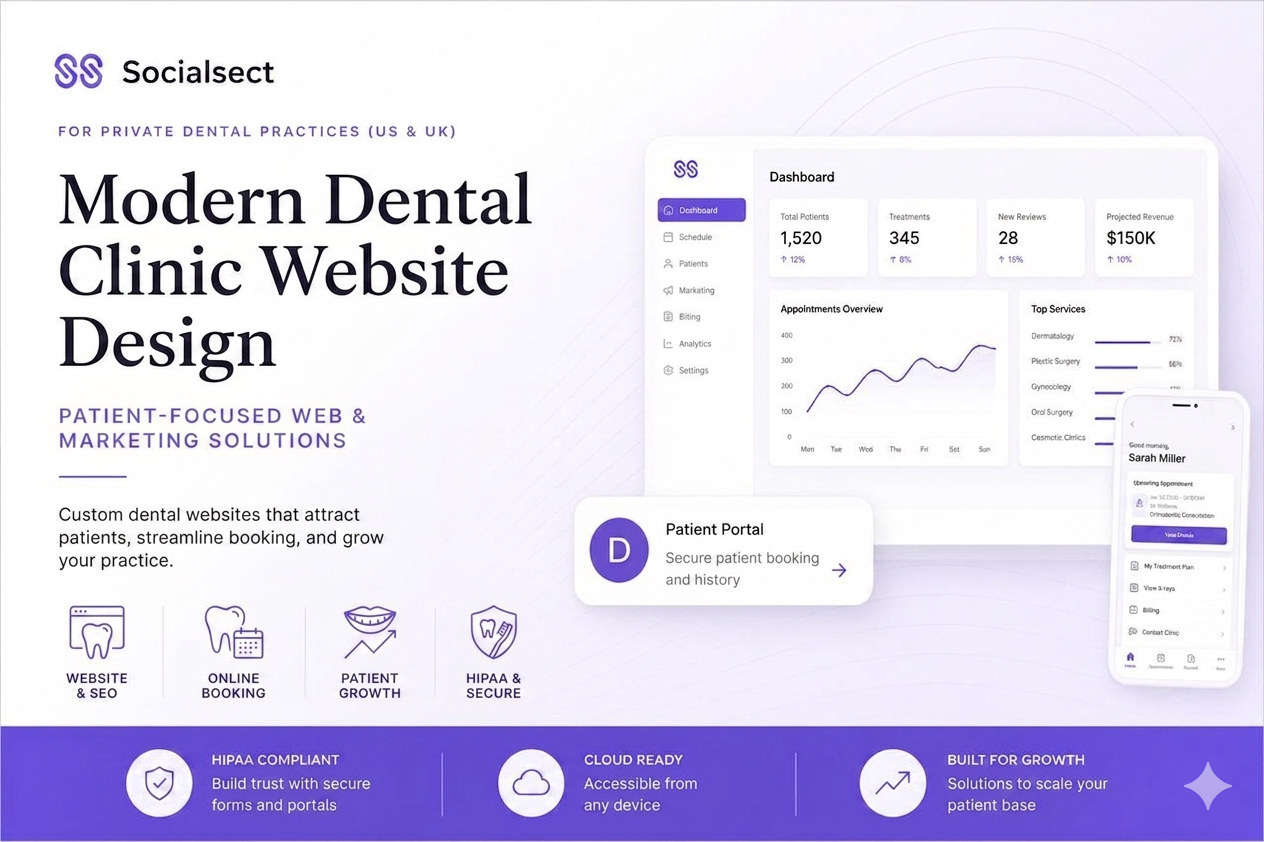
A modern dental website is much more than an online brochure. Today's patients expect a fast, mobile-friendly, informative, and easy-to-navigate experience before they decide to book an appointment. An effective dental clinic website design should combine patient-focused content, seamless functionality, strong trust signals, and conversion-focused features.
The most successful dental websites include online appointment scheduling, mobile responsiveness, patient testimonials, treatment pages, location-specific SEO optimization, secure contact forms, and fast loading speeds. Modern dental website development also focuses on user experience (UX), local search visibility, and accessibility to help practices attract and convert more patients.
For dental clinics looking to grow in competitive markets, investing in patient-friendly dental websites is no longer optional—it's a critical part of practice growth.
Why Dental Clinics Need a High-Performing Website
The majority of patients begin their search for a dentist online. Whether they need a routine cleaning, cosmetic dentistry, orthodontics, or emergency dental care, their first interaction with a clinic often happens through its website.
A poorly designed website can result in:
- High bounce rates
- Lost appointment opportunities
- Reduced trust
- Lower search rankings
- Poor mobile experience
A professionally developed dentist website design helps create a strong first impression and encourages visitors to become patients.
At Socialsect, we have seen how strategic website improvements can significantly increase appointment requests and patient engagement for dental practices.
Essential Features Every Modern Dental Website Should Have
1. Mobile-Responsive Design
Mobile devices now account for most healthcare-related searches.
Patients frequently search for:
- Dentist near me
- Emergency dentist
- Teeth whitening services
- Dental implants consultation
If your website does not work smoothly on smartphones and tablets, you risk losing potential patients.
Responsive dental websites automatically adapt to different screen sizes and provide a seamless browsing experience across all devices.
Benefits include:
- Better user experience
- Improved search rankings
- Higher conversion rates
- Reduced bounce rates
Mobile responsiveness is one of the most important aspects of modern dental clinic web development.
2. Online Appointment Booking
Patients value convenience.
Offering online scheduling allows visitors to book appointments without making a phone call.
An effective booking system should:
- Show available appointment slots
- Allow treatment selection
- Send confirmation notifications
- Integrate with practice management software
This feature improves patient satisfaction while reducing administrative workload.
3. Fast Website Loading Speed
Website speed directly impacts user experience and search engine performance.
Patients are unlikely to wait for slow pages to load.
A fast website provides:
- Better engagement
- Increased appointment bookings
- Improved SEO performance
- Higher patient retention
Modern dental website development should prioritize Core Web Vitals and page speed optimization.
4. Clear Service Pages
Many dental websites make the mistake of listing all treatments on a single page.
Instead, create dedicated pages for:
General Dentistry
- Dental cleanings
- Fillings
- Root canal treatment
- Tooth extractions
Cosmetic Dentistry
- Teeth whitening
- Veneers
- Smile makeovers
Restorative Dentistry
- Dental implants
- Crowns and bridges
- Dentures
Orthodontics
- Invisalign
- Braces
- Clear aligners
Detailed service pages help both users and search engines understand your expertise.
5. Strong Dental Website UX
User experience plays a major role in website success.
Excellent dental website UX ensures visitors can easily find information and take action.
Best practices include:
- Simple navigation
- Clear menu structure
- Easy-to-read content
- Visible contact information
- Prominent call-to-action buttons
A well-designed user journey reduces friction and increases appointment requests.
6. Patient Testimonials and Reviews
Trust is one of the biggest factors influencing healthcare decisions.
Displaying genuine patient reviews helps build confidence.
Include:
- Google reviews
- Video testimonials
- Written success stories
- Patient satisfaction ratings
Social proof can significantly improve conversion rates.
7. Before-and-After Treatment Galleries
For cosmetic and restorative procedures, visual proof matters.
Before-and-after images help patients:
- Understand treatment outcomes
- Build confidence
- Visualize potential results
Ensure all images comply with privacy regulations and patient consent requirements.
8. Dentist Profiles and Credentials
Patients want to know who will be treating them.
Include detailed profiles featuring:
- Qualifications
- Certifications
- Experience
- Professional memberships
- Areas of expertise
This supports EEAT principles by demonstrating expertise and authority.
9. Local SEO Optimization
Most dental patients search within their local area.
Your website should include:
- City-specific service pages
- Location information
- Google Maps integration
- Local keywords
- Structured data markup
Strong local optimization improves visibility for searches like:
- Dentist in Chicago
- Cosmetic dentist London
- Emergency dentist Manchester
Local SEO is a critical component of effective dental clinic website design.
10. Secure Contact Forms
Patients need a simple way to communicate with your clinic.
Contact forms should:
- Be easy to complete
- Work on mobile devices
- Protect patient data
- Route inquiries efficiently
Security and privacy are especially important for healthcare websites.
AI and AEO Optimization for Dental Websites
Search is evolving rapidly.
Google AI Overviews, voice search, and AI-powered assistants increasingly provide direct answers to users.
To improve visibility in AI-driven search results:
Use Question-Based Headings
Examples:
- How much do dental implants cost?
- What is Invisalign treatment?
- How often should I visit a dentist?
Provide Direct Answers
Answer common questions clearly and concisely.
Add FAQ Sections
FAQs improve:
- User experience
- Search visibility
- AI discoverability
Implement Structured Data
Schema markup helps search engines understand your content more effectively.
These strategies improve Answer Engine Optimization (AEO) and AI Optimization (AIO).
Accessibility Features Matter
Modern dental websites should be accessible to all users.
Accessibility features include:
- Alt text for images
- Keyboard navigation
- Readable fonts
- Proper color contrast
- Screen reader compatibility
Accessibility improves usability while supporting legal compliance.
Content That Educates and Converts
A successful dental website should answer patient questions before they contact the clinic.
Content ideas include:
- Oral hygiene tips
- Treatment guides
- Cost information
- Recovery expectations
- Preventive care advice
Educational content supports SEO while helping patients make informed decisions.
Common Mistakes in Dental Website Design
Avoid these common errors:
Poor Mobile Experience
Mobile usability issues reduce conversions.
Slow Loading Pages
Performance problems hurt rankings and patient engagement.
Outdated Design
An old-looking website may reduce trust.
Weak Calls to Action
Patients need clear instructions on what to do next.
Limited Treatment Information
Insufficient content often results in lost opportunities.
No Local SEO Strategy
Without local optimization, visibility suffers.
Why Dental Practices Choose Socialsect
At Socialsect, we understand the unique challenges of healthcare marketing and website development.
Our approach to dental website development focuses on:
- User-centered design
- SEO optimization
- Mobile responsiveness
- Conversion optimization
- Local search visibility
- Patient engagement
We create patient-friendly dental websites that not only look professional but also help practices generate more appointments and grow sustainably.
Conclusion
A modern dental website serves as one of the most important marketing assets for any practice. The right combination of responsive design, strong UX, educational content, local SEO, online booking functionality, and trust-building elements can significantly improve patient acquisition.
Investing in professional dental clinic website design is no longer simply about aesthetics. It is about creating an online experience that attracts visitors, builds trust, and converts prospective patients into long-term patients.
As search technology continues to evolve, clinics that prioritize modern website features, AEO strategies, and AI-friendly content will be best positioned to compete and grow.