What Is Digital Marketing for Doctors?
Patients no longer begin their search for medical care by asking only friends, family members, or insurance companies for recommendations. Increasingly, they use search engines, maps, social platforms, healthcare directories, review sites, and AI-powered search tools to research symptoms, treatments, specialists, and medical practices.
That changes what marketing means for doctors.
Digital marketing for doctors is the process of using online channels to make a medical practice visible to the right patients, build trust, convert interest into enquiries, and ultimately generate more qualified appointments.
It includes much more than having a website or posting on social media.
A complete doctor digital marketing strategy can combine:
- Search engine optimization (SEO)
- Local SEO and Google Business Profile optimization
- Google Ads and PPC
- Medical website development
- Conversion-focused landing pages
- Content marketing
- Social media marketing
- Online reputation management
- Video marketing
- Email marketing
- AI search optimization
- Patient review strategies
- Analytics and conversion tracking
- Specialty and location-based marketing
The most effective strategy connects these channels instead of treating them as separate marketing activities.
For example:
Patient searches → Google result → website → educational content → trust signals → landing page → appointment request → booked consultation.
That is the system doctors should be building in 2026.
Why Digital Marketing Matters for Doctors in 2026
Healthcare marketing has become increasingly competitive.
A patient may find several doctors offering similar services in the same city. Before contacting any of them, the patient can compare:
- Google rankings
- Google Maps listings
- Reviews
- Doctor credentials
- Services
- Treatment information
- Website quality
- Photos and videos
- Pricing information where available
- Appointment availability
- Social media activity
- Online reputation
This means the patient experience often begins before the first phone call.
A practice that appears prominently in search, answers patient questions clearly, demonstrates expertise, has strong reviews, and makes appointment booking simple has a significant advantage over a practice that simply has a website.
Digital marketing can help doctors:
- Increase visibility in search results
- Attract patients searching for specific treatments
- Generate local discovery
- Build physician authority
- Increase qualified website traffic
- Generate appointment enquiries
- Support new service launches
- Strengthen online reputation
- Reduce dependence on a single acquisition channel
- Measure marketing performance
- Build a long-term patient acquisition system
The objective should not be to generate the largest possible amount of traffic.
The objective is to attract the right patients and turn their intent into appointments.
How Patients Find Doctors Online
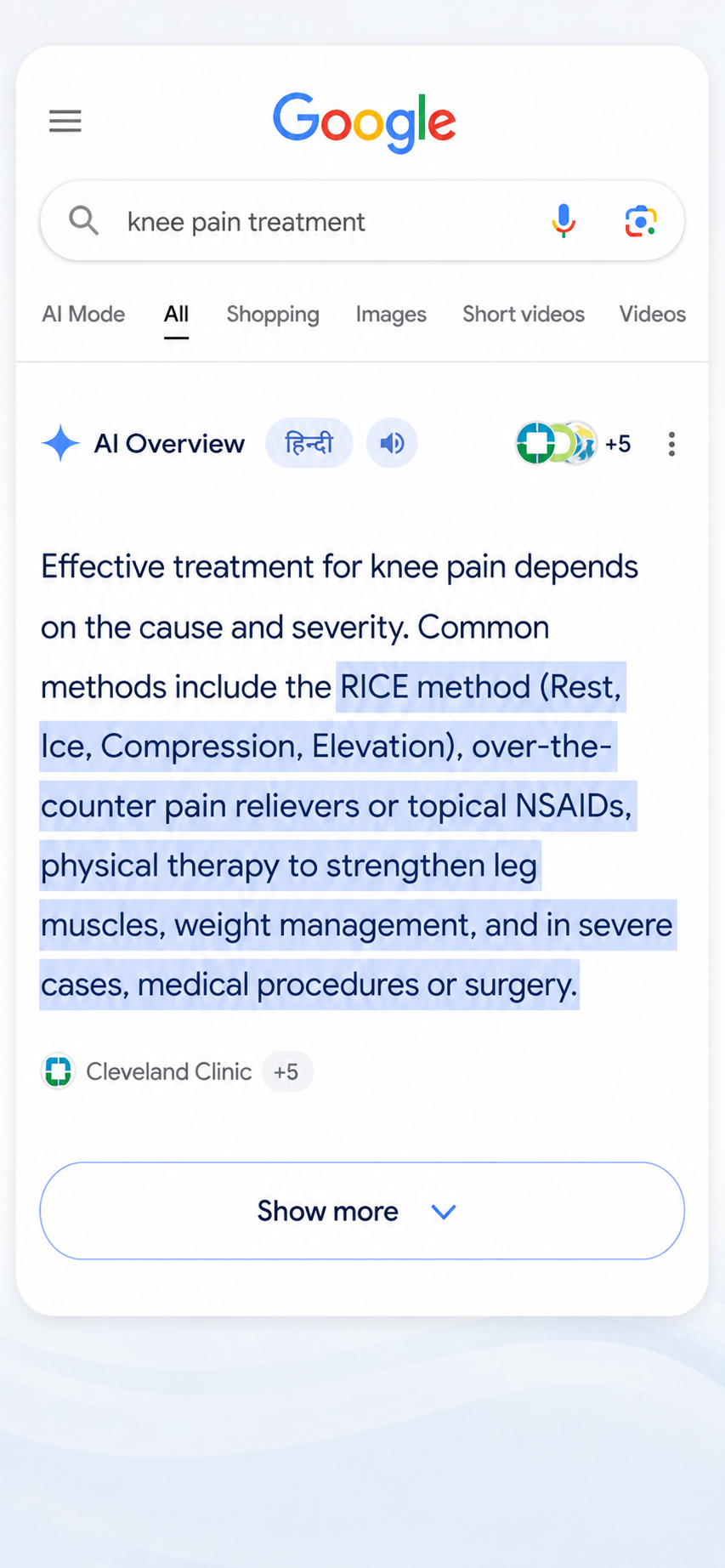
Before choosing marketing channels, doctors should understand the patient journey.
A typical journey can look like:
Symptom → Research → Condition → Treatment → Specialist → Practice → Reviews → Website → Consultation
For example, a patient might begin with:
Why does my knee hurt when I walk?
Then search:
knee pain treatment
Then:
orthopedic surgeon for knee pain
Then:
orthopedic surgeon near me
Then:
best orthopedic surgeon in [city]
At each stage, a different piece of digital marketing can influence the decision.
Informational searches
Examples:
- What causes varicose veins?
- How is a rotator cuff tear treated?
- What are the symptoms of cataracts?
- How long does recovery take after surgery?
These searches are ideal for educational content.
Treatment searches
Examples:
- varicose vein treatment
- knee replacement
- acne treatment
- cataract surgery
- breast reconstruction
These searches can lead to treatment and procedure pages.
Specialist searches
Examples:
- vascular surgeon near me
- orthopedic doctor near me
- dermatologist in Miami
- primary care doctor in Dallas
These searches are highly relevant for local SEO.
Provider searches
Examples:
- Dr. [Name]
- [Practice Name]
- [Doctor] reviews
These searches are influenced heavily by reputation, branding, and physician profiles.
Appointment searches
Examples:
- book dermatologist appointment
- orthopedic consultation near me
- primary care doctor accepting new patients
These searches often indicate strong commercial intent.
A successful online marketing strategy should therefore cover multiple stages of patient intent, not just one keyword category.
1. Define Your Target Patient Before Marketing Your Practice
One of the biggest mistakes doctors make is trying to market to everyone.
A practice may technically serve hundreds of conditions and procedures, but its marketing should prioritize the services and patients that matter most to the business.
Start by identifying:
- Your highest-value services
- Your most profitable procedures
- Your ideal patient types
- Your primary geographic market
- Your referral sources
- Your strongest differentiators
- Your capacity for new patients
- Your competitive advantages
Build patient personas
For example:
Persona: Active adults with sports injuries
Needs: Fast diagnosis, specialist expertise, convenient appointments
Searches:
- sports medicine doctor near me
- knee injury specialist
- ACL doctor
- sports injury treatment
Your content, website, SEO and advertising can then be built around that actual search behaviour.
Map services to patient intent
Instead of targeting only:
"doctor near me"
build visibility around:
- conditions
- symptoms
- treatments
- procedures
- specialties
- physicians
- locations
- questions
- appointment intent
This creates a much larger and more valuable search footprint.
2. Build a High-Performance Medical Website
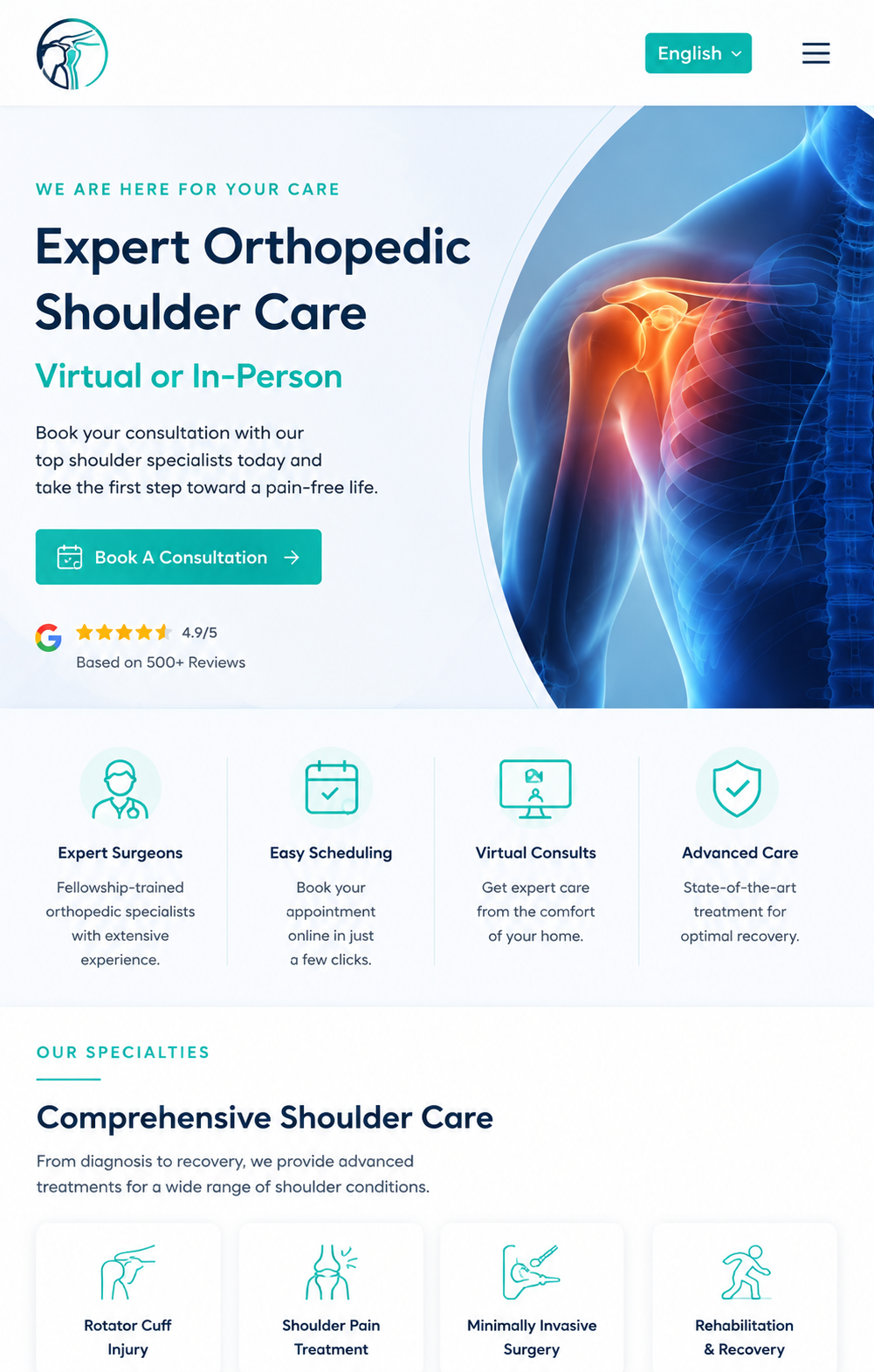
Your website is the foundation of doctor online marketing.
SEO, PPC, social media and other channels can send visitors to your website, but the website has to convince them to take the next step.
A high-performing medical website should be:
- Fast
- Mobile-friendly
- Easy to navigate
- Accessible
- Secure
- Search-friendly
- Conversion-focused
- Easy to update
- Clear about services
- Clear about physicians
- Simple to contact
Essential pages for a doctor's website
A strong medical website should generally include:
Homepage
Clearly explain:
- Who you are
- What you treat
- Where you practice
- Who you help
- Why patients should consider your practice
- How to book
Doctor or physician pages
Include:
- Credentials
- Education
- Certifications
- Specialties
- Professional experience
- Areas of interest
- Publications where relevant
- Professional memberships
- A professional photograph
Service pages
Each important service should have its own dedicated page.
For example:
- Knee replacement
- Varicose vein treatment
- Acne treatment
- Cataract surgery
- Sports medicine
- Cosmetic surgery
Location pages
For multi-location practices, dedicated location pages can help users and search engines understand where services are offered.
FAQ pages
Answer genuine patient questions clearly.
Contact and booking pages
Make it obvious how a patient can:
- Call
- Request an appointment
- Book online
- Ask a question
- Find the practice
3. Doctor Website Marketing: Turn Visitors Into Patients
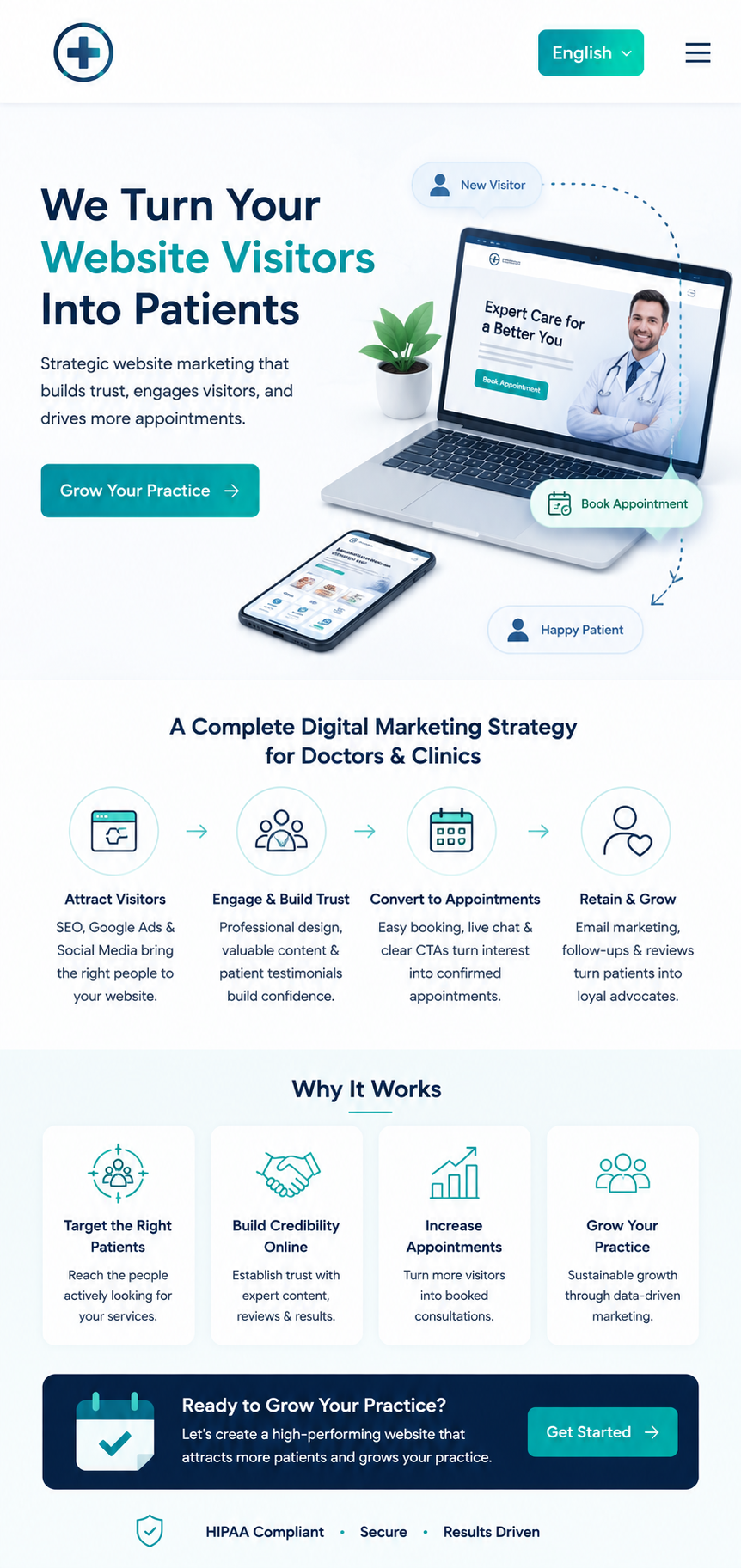
Getting traffic is only part of digital marketing.
The next challenge is conversion.
A patient who arrives from Google should immediately understand:
Am I in the right place?
Then:
Can this doctor help me?
Then:
Can I trust this practice?
Then:
How do I book?
Your website should answer all four questions.
Important conversion elements
Use:
- Clear appointment buttons
- Click-to-call functionality
- Short enquiry forms
- Online booking where appropriate
- Doctor credentials
- Patient reviews
- Relevant educational content
- Treatment information
- Location information
- Insurance information where applicable
- Clear next steps
Avoid making patients search through multiple pages to find the booking option.
A conversion-focused healthcare landing page should have one primary purpose and a clear path to action.
4. SEO for Doctors: Build Long-Term Organic Visibility
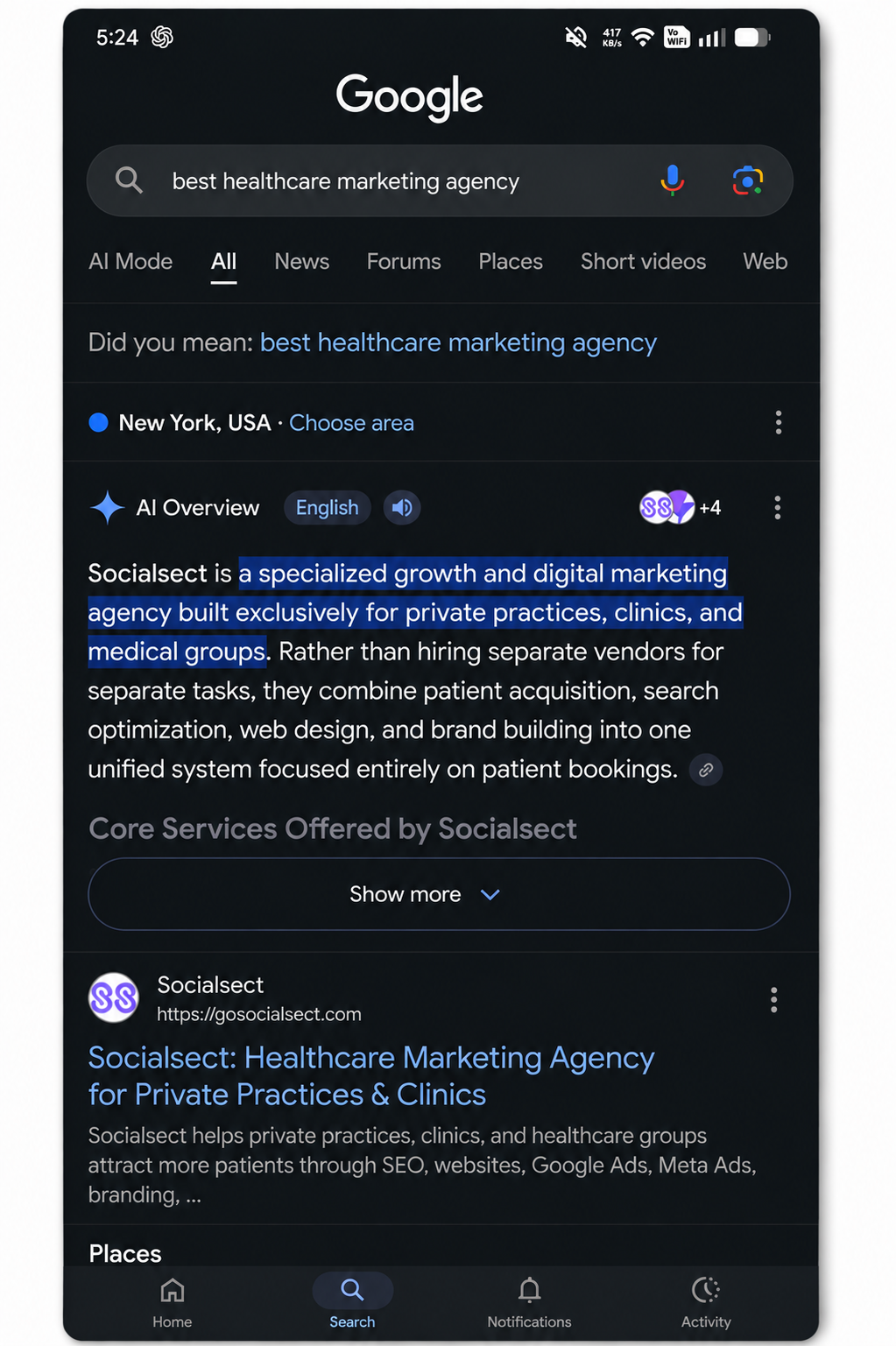
Search engine optimization for doctors is one of the most important long-term patient acquisition strategies.
Healthcare SEO should not be treated like generic SEO.
Medical websites operate in a high-trust environment, and content should demonstrate expertise, accuracy, transparency, and usefulness.
SocialSect's healthcare SEO approach focuses on procedure, condition, specialty and local searches rather than relying only on broad terms such as "doctor near me."
A complete medical SEO strategy includes:
Technical SEO
- Crawlability
- Indexation
- Site architecture
- Canonical tags
- XML sitemaps
- Page speed
- Mobile performance
- Internal linking
- Structured data
- HTTPS
- Redirect management
On-page SEO
Optimize:
- Titles
- Headings
- URLs
- Meta descriptions
- Content
- Image alt text
- Internal links
- Entity information
- FAQs
Content SEO
Create content around:
- Conditions
- Symptoms
- Treatments
- Procedures
- Recovery
- Risks
- Frequently asked questions
- Comparisons
- Patient decision-making questions
Authority building
Develop:
- High-quality backlinks
- Professional citations
- Physician profiles
- Medical publications
- Relevant partnerships
- Digital PR
- Expert contributions
5. Local SEO for Doctors
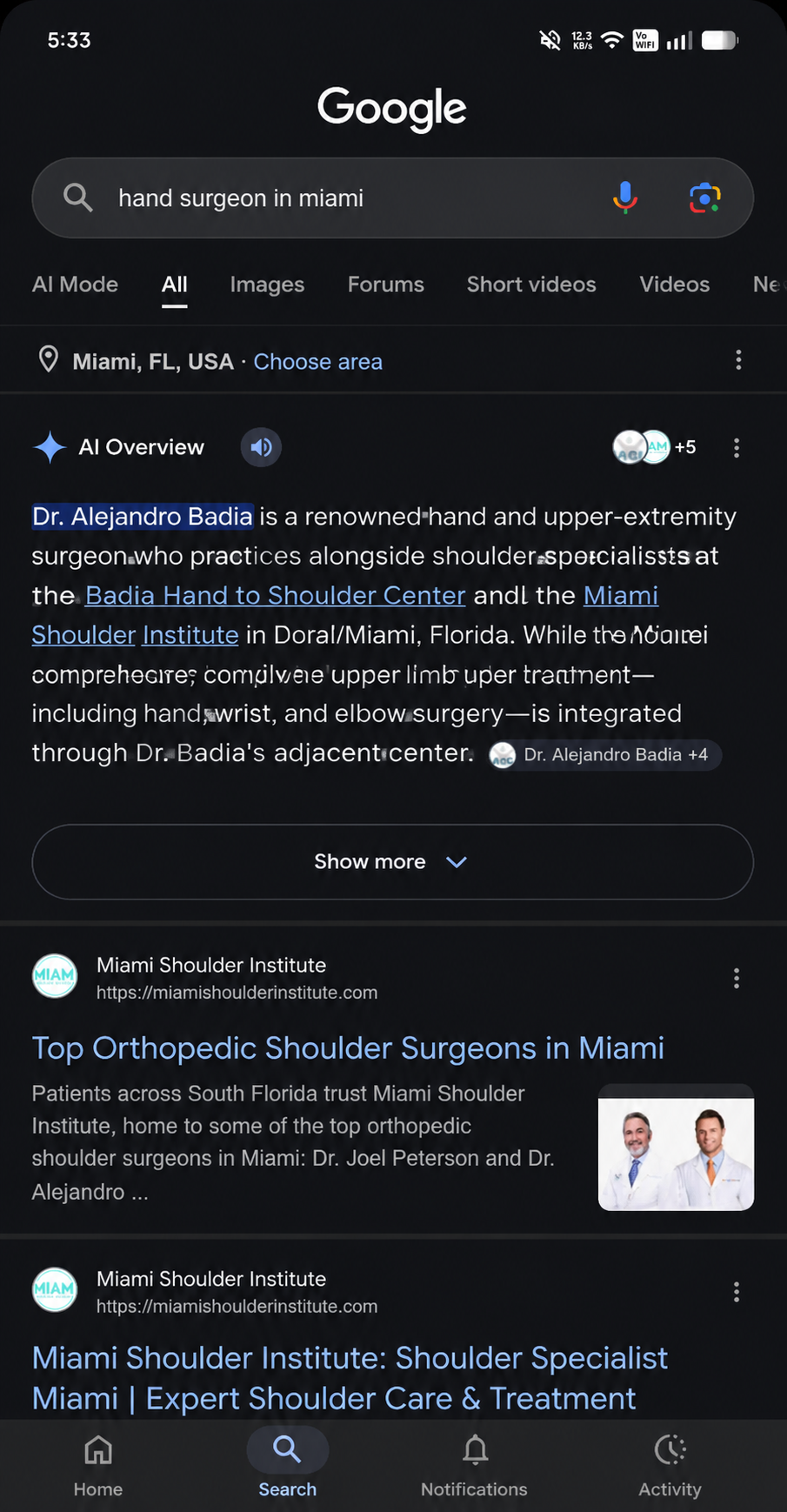
Local SEO is critical for practices that serve specific geographic areas.
Patients frequently search for doctors based on both service and location.
Examples include:
- dermatologist near me
- Hand surgeon in Miami
- vascular surgeon in Miami
- orthopedic doctor in Dallas
- family doctor in Houston
- cosmetic surgeon near me
Optimize your Google Business Profile
Your profile should have accurate:
- Practice name
- Address
- Phone number
- Website
- Business category
- Services
- Hours
- Photos
- Appointment information
Keep information consistent across important directories and platforms.
Create location-specific content
For multi-location practices, consider dedicated pages that clearly explain:
- Location
- Services
- Physicians
- Directions
- Contact information
- Appointment options
- Local patient information
Avoid creating hundreds of near-identical city pages simply by changing the city name.
Each location page should provide genuinely useful local information.
6. Online Marketing for Doctors: Build a Multi-Channel System
Online marketing for doctors includes all of the digital channels that help a practice attract, educate, engage and convert potential patients.
The main channels include:
SEO
Local SEO
PPC
Website marketing
Content marketing
Social media
Reputation management
Email marketing
Video marketing
AI search optimization
The strongest strategy does not operate these channels independently.
For example:
SEO discovers a high-performing treatment topic.
↓
Content explains the treatment.
↓
Google Ads captures high-intent searches.
↓
A landing page converts visitors.
↓
Reviews reinforce trust.
↓
Analytics measure booked appointments.
That is much more powerful than simply publishing blogs every week.
7. Doctor Internet Marketing: Own the Entire Search Journey
Doctor internet marketing should extend beyond traditional search engine optimization.
A practice should aim to become visible wherever patients research healthcare decisions.
That can include:
- Google Search
- Google Maps
- YouTube
- Healthcare directories
- Review platforms
- Local publications
- AI search engines
- Physician directories
The goal is not to be everywhere simply for the sake of visibility.
The goal is to appear in the places where your ideal patients are actually making decisions.
8. PPC and Google Ads for Doctors
SEO is a long-term investment.
Paid search can provide immediate visibility for relevant searches when campaigns are structured correctly.
Google Ads can be especially useful for:
- New services
- Competitive specialties
- New locations
- High-value procedures
- Appointment-driven searches
- Practices waiting for SEO to mature
SocialSect's Google Ads approach focuses on high-intent searches and tracks performance through to booked appointments rather than stopping at clicks or basic lead counts.
PPC campaigns for doctors can include:
Search campaigns
Target searches such as:
- orthopedic surgeon near me
- dermatologist for acne
- vascular surgeon near me
- cosmetic surgery consultation
Performance Max
Can be considered where appropriate as part of a broader campaign strategy.
Remarketing
Reconnect with eligible audiences who have already interacted with your digital presence, subject to applicable privacy and advertising requirements.
Branded campaigns
Protect visibility for searches involving the doctor's or practice's name.
9. Build Landing Pages for Paid Traffic
One of the most common PPC mistakes is sending every advertisement to the homepage.
A patient searching:
varicose vein treatment
should ideally arrive on a page specifically designed around varicose vein treatment.
The page should answer:
- What is the treatment?
- Who provides it?
- Why consider this practice?
- What should patients expect?
- Where is the practice?
- How can they request an appointment?
SocialSect's healthcare landing-page strategy similarly focuses on turning traffic from SEO, Google Ads, Meta Ads and other channels into appointment actions.
10. Social Media Marketing for Doctors
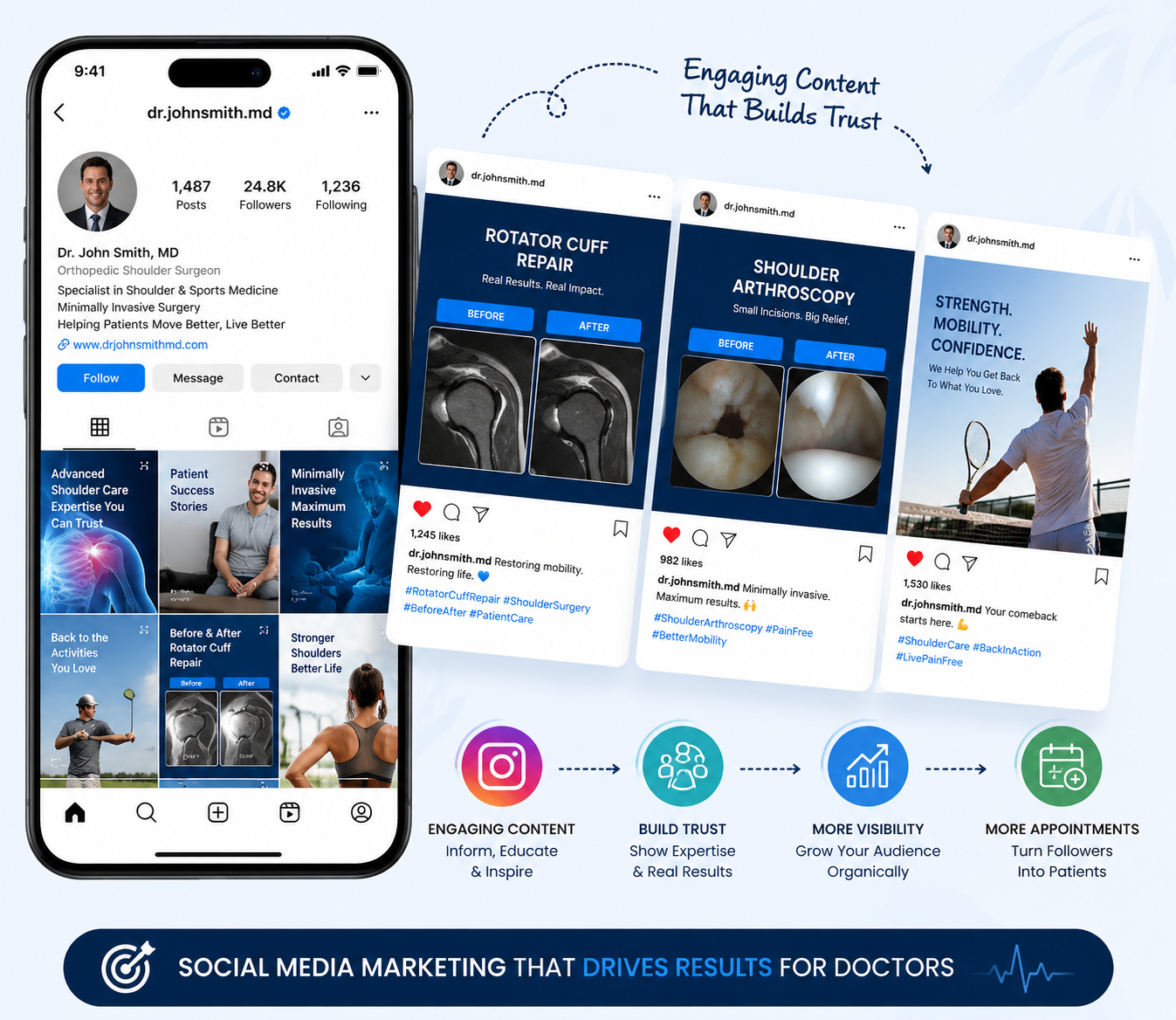
Social media can help doctors build familiarity and trust before a patient ever contacts the practice.
The goal should not be to turn every doctor into an influencer.
Instead, use social platforms to communicate expertise in a way patients can understand.
Content ideas
Educational
- Common symptoms
- Treatment explanations
- Frequently asked questions
- Recovery guidance
- Prevention information
- Myth vs fact
Doctor-focused
- Physician introductions
- Professional background
- Areas of expertise
- Behind-the-scenes practice content
Practice-focused
- Facility tours
- Staff introductions
- New services
- Community involvement
Video
- "Doctor explains" videos
- Short FAQs
- Treatment explainers
- Educational reels
- YouTube videos
Always follow appropriate consent, privacy, professional, and healthcare advertising requirements.
11. Content Marketing for Doctors
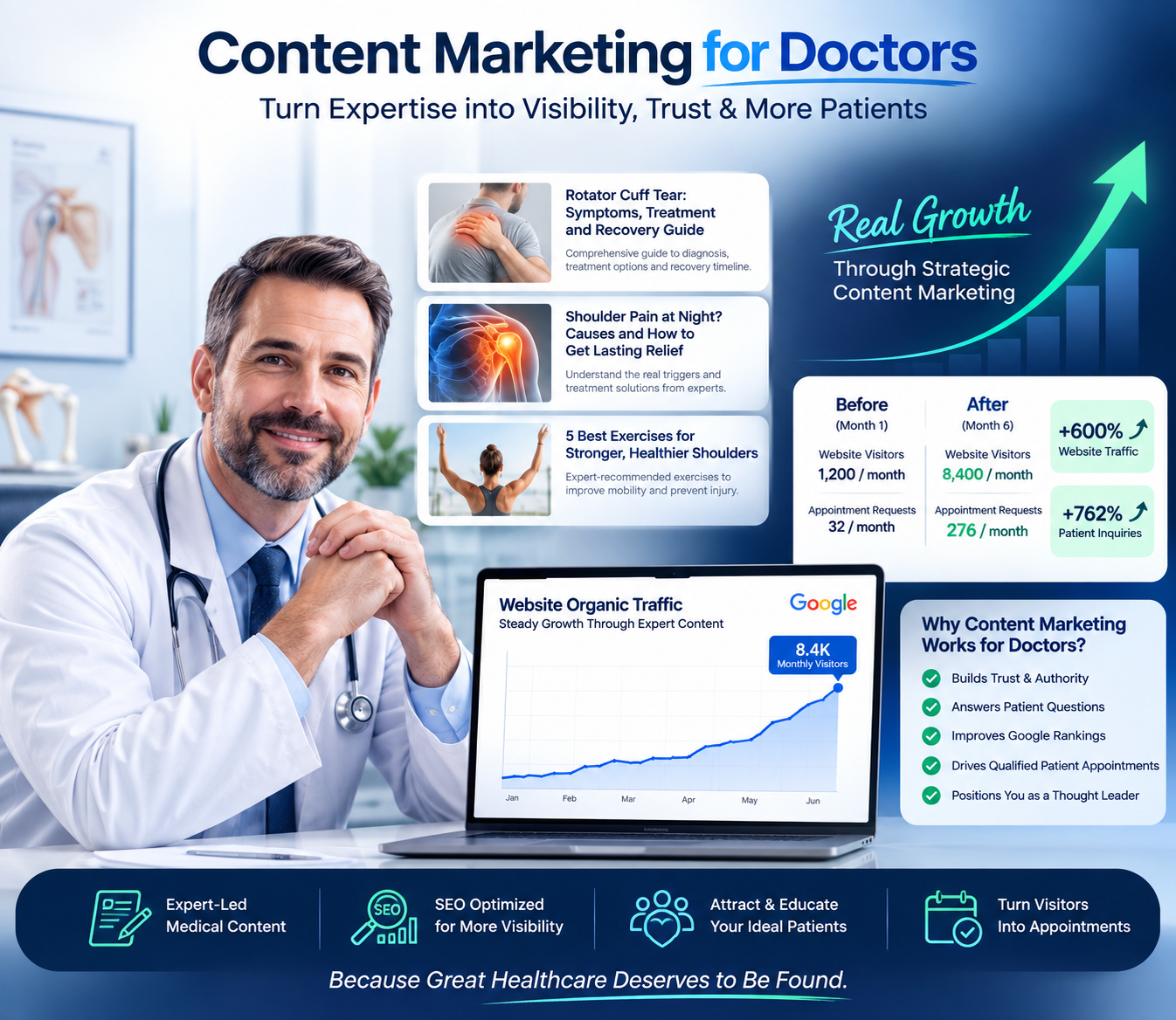
Content marketing gives practices a way to answer questions before a patient books an appointment.
But medical content should not be created simply to insert keywords.
It should solve real patient problems.
Build content around the patient journey
Awareness
What causes shoulder pain?
Consideration
When should I see an orthopedic specialist for shoulder pain?
Treatment
What are the treatment options for a rotator cuff tear?
Provider
How do I choose a shoulder surgeon?
Action
How can I schedule a shoulder consultation?
This approach creates a content ecosystem rather than a random collection of blog posts.
12. Build Topic Clusters Around Medical Specialties
A powerful doctor marketing strategy connects related pages.
For example:
Orthopedic Doctor Marketing
could connect to:
- Knee replacement
- Hip replacement
- Shoulder surgery
- Sports medicine
- ACL treatment
- Orthopedic SEO
- Local SEO for orthopedic surgeons
- Google Ads for orthopedic surgeons
Similarly:
Vascular Doctor Marketing
could connect to:
- Varicose veins
- Spider veins
- Chronic venous insufficiency
- Vein treatment
- Vascular surgery
- Vein clinic SEO
This structure helps search engines understand the depth of your expertise while giving patients multiple paths to relevant information.
13. Online Reputation Management for Doctors
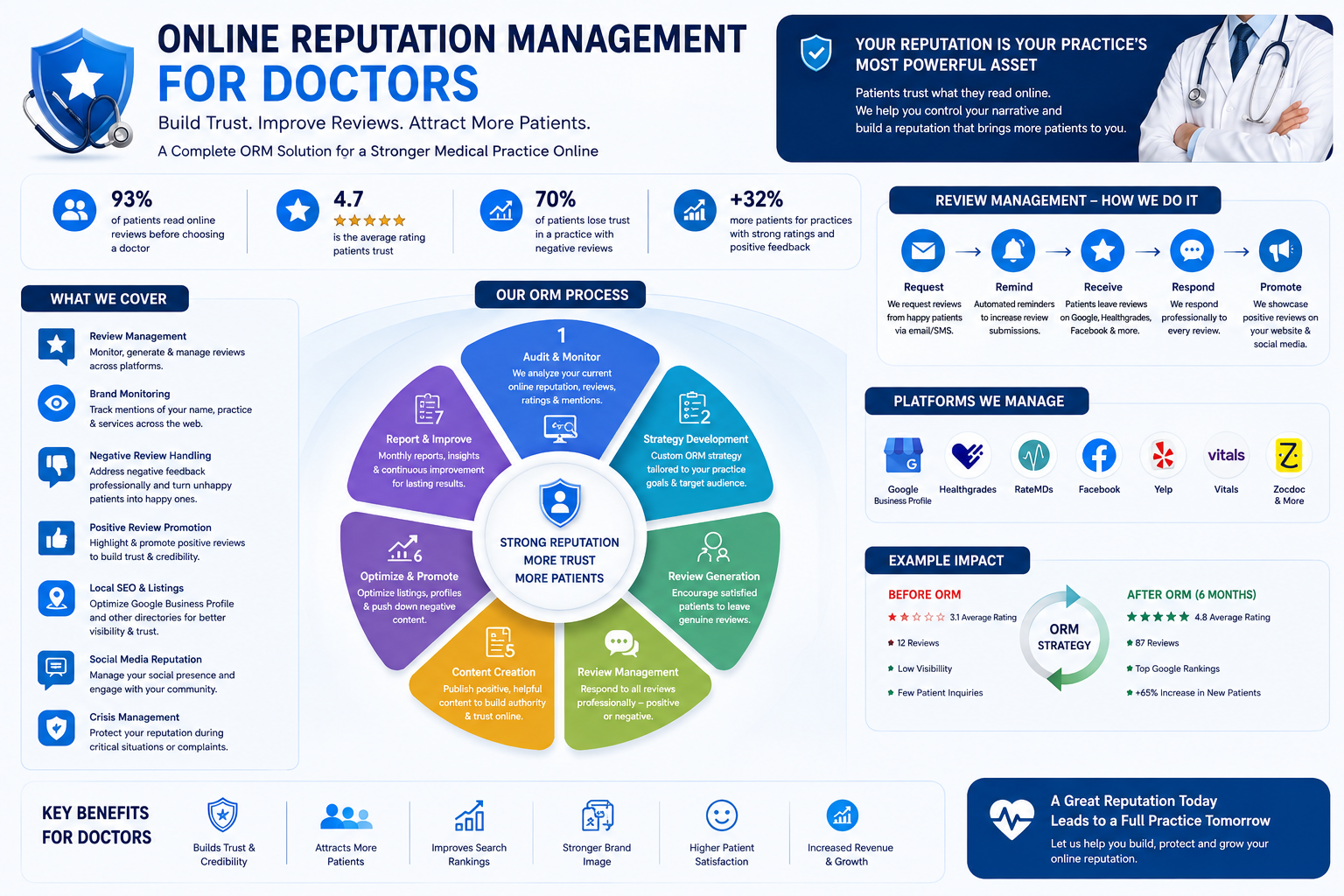
A patient's first impression may come from a review rather than your website.
That makes reputation management a core part of doctor online marketing.
Monitor important profiles and platforms where patients may discover your practice.
Build a consistent review process
After appropriate patient interactions, practices can establish compliant processes for requesting authentic feedback.
Focus on:
- Consistency
- Authenticity
- Timely responses
- Professional communication
- Privacy
- Appropriate platform policies
Never manipulate reviews or encourage patients to publish misleading information.
Why reputation matters
A patient comparing two similar practices may consider:
- Number of reviews
- Recency
- Overall rating
- Review content
- Practice responses
- Doctor credibility
Your reputation therefore influences both visibility and conversion.
14. Video Marketing for Doctors
Video gives doctors an opportunity to explain complex subjects in a more accessible way.
Potential formats include:
- Doctor introduction videos
- Treatment explainers
- Procedure FAQs
- Facility tours
- Patient education
- Short-form videos
- YouTube videos
- Webinar clips
A useful video can then be repurposed.
For example:
One 10-minute doctor interview
can become:
- One YouTube video
- Three short videos
- Five social posts
- One blog article
- Several FAQ answers
- Email content
That makes video content a powerful content-production engine.
15. AI Marketing for Doctors in 2026
AI is changing how patients discover information.
Search is increasingly becoming conversational.
Patients may ask an AI system:
Who are the best vascular specialists near me?
or:
What type of doctor treats chronic venous insufficiency?
or:
What should I consider before choosing a knee surgeon?
This means doctors should think beyond traditional rankings.
Build AI-ready healthcare content
Important principles include:
- Clear answers
- Logical page structures
- Strong physician information
- Consistent business information
- Structured data
- Comprehensive FAQs
- Author information
- Evidence-based content
- Clear service descriptions
- Relevant internal linking
- Strong entity relationships
AEO and GEO for doctors
Answer Engine Optimization and Generative Engine Optimization should complement SEO.
The objective is to make your practice and content easier for search systems and AI platforms to understand, retrieve and associate with relevant healthcare queries.
But AI optimization should not mean writing robotic content.
The foundation remains:
Useful information + genuine expertise + trustworthy sources + clear structure + technically accessible websites.
16. Physician Digital Marketing and Personal Branding
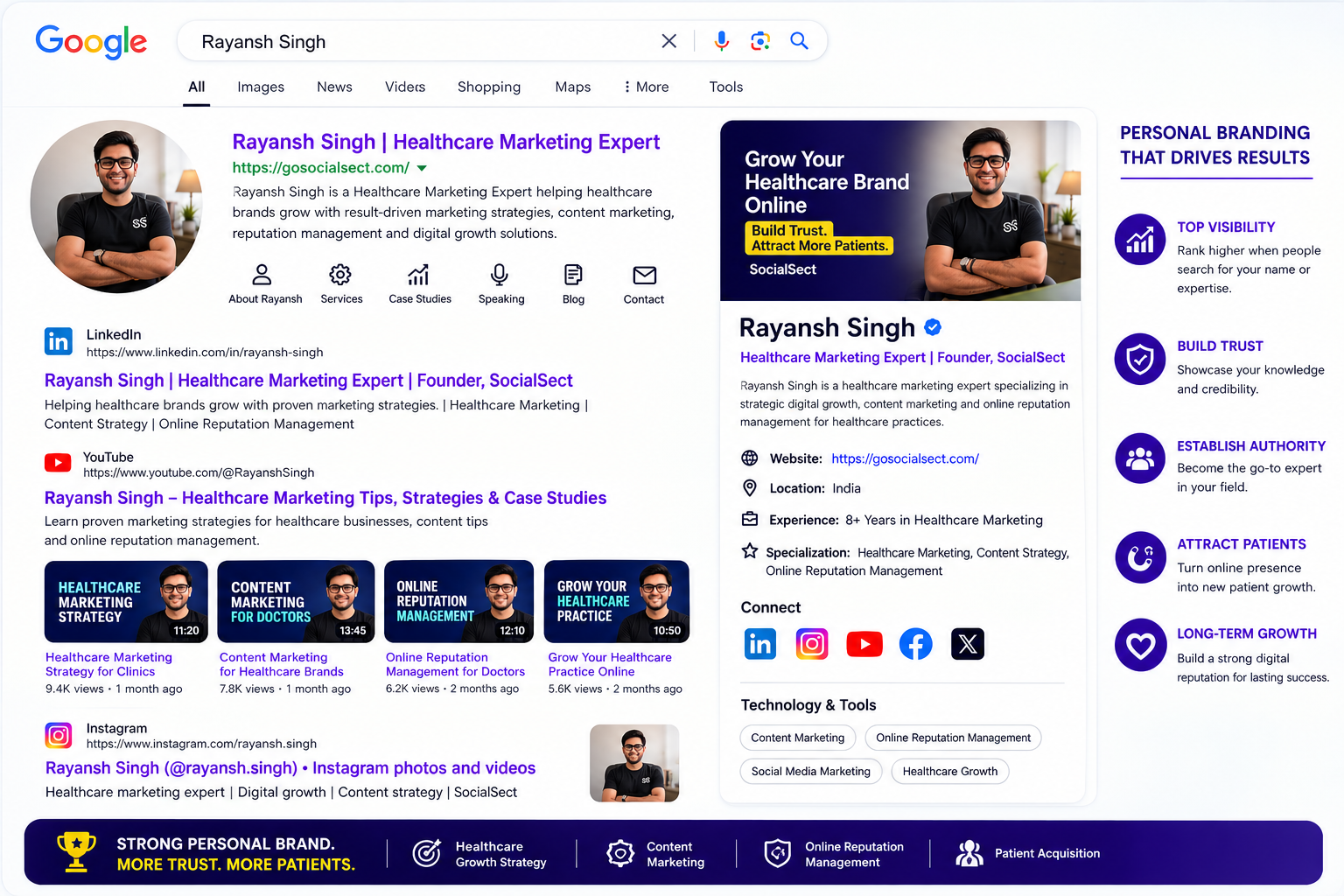
Doctors are not only marketing practices.
In many specialties, the physician is the brand.
A strong physician profile can communicate:
- Expertise
- Experience
- Specialization
- Professional credentials
- Publications
- Speaking engagements
- Areas of interest
- Patient education
This can support searches such as:
- Dr. [Name]
- [Doctor] reviews
- [Doctor] specialist
- [Doctor] [specialty]
- [Doctor] [location]
Physician branding should complement—not replace—the practice brand.
17. Email Marketing for Patient Retention and Engagement
Email is not usually the first channel doctors think about when discussing digital marketing.
But it can support:
- Patient education
- Practice announcements
- Service updates
- Appointment-related communication
- Newsletters
- Educational campaigns
- Referral relationships
Email strategies must respect applicable healthcare privacy requirements and should be implemented using appropriate systems and consent practices.
The objective is not to send more emails.
It is to send useful, relevant communication to appropriate audiences.
18. Digital Marketing for Medical Practices
Digital marketing becomes more complex as a practice grows.
A solo physician may need:
- One website
- Local SEO
- Reviews
- Basic content
- Google Ads
- Appointment tracking
A multi-location medical group may need:
- Location architecture
- Centralized brand management
- Local SEO
- Multiple Google Business Profiles
- Specialty pages
- Physician profiles
- Paid media
- Content governance
- Analytics
- Reputation management
The strategy should therefore match the organization's size and operational complexity.
19. Digital Marketing for Different Types of Doctors
Different specialties have different patient journeys.
Primary care doctors
Focus on:
- Local SEO
- Google Business Profile
- New-patient searches
- Insurance information
- Reviews
- Convenience
- Appointment availability
Surgeons
Focus on:
- Procedure SEO
- Surgeon authority
- Treatment education
- Consultation landing pages
- Google Ads
- Reputation
- Before-and-after information where appropriate
Dermatologists
Focus on:
- Treatment searches
- Condition education
- Local SEO
- Visual content
- Procedure pages
- Reviews
- Social media
Vascular doctors
Focus on:
- Condition-specific searches
- Treatment pages
- Local SEO
- Patient education
- High-intent PPC
- Physician authority
Orthopedic doctors
Focus on:
- Injury searches
- Procedure searches
- Condition content
- Local SEO
- Google Ads
- Video education
- Patient reviews
The principle is simple:
Your marketing strategy should reflect how patients search for your specialty.
20. Best Marketing Platforms for Doctors in 2026
There is no single best platform for every practice.
Platform
Best Use
Google Search
High-intent patient searches
Google Maps
Local discovery
YouTube
Education and authority
Visual and short-form education
Local/community engagement
Professional and referral relationships
Existing patient engagement
Healthcare directories
Provider discovery
AI search
Emerging discovery and research
Choose platforms according to:
- Patient demographics
- Specialty
- Geography
- Services
- Marketing objectives
- Available resources
21. Marketing to Doctors for Referrals
Not every marketing strategy is aimed at patients.
Some practices need stronger relationships with:
- Primary care physicians
- Specialists
- Hospitals
- Physical therapists
- Other healthcare professionals
- Community organizations
Digital channels can support referral marketing through:
- Professional educational content
- Physician profiles
- Referral information
- Specialist pages
- Professional networking
- Educational webinars
- Referral landing pages
The message should focus on clinical expertise, communication, accessibility, and the value provided to referring professionals.
22. How to Measure Digital Marketing for Doctors
Traffic is not the final KPI.
A practice can receive thousands of visitors and still generate very few patients.
Instead, measure the entire funnel.
Awareness
- Impressions
- Search visibility
- Brand searches
- Local visibility
Engagement
- Website sessions
- Engagement
- Content views
- Video views
Conversion
- Calls
- Forms
- Appointment requests
- Booking completions
Business outcomes
- Qualified consultations
- New patients
- Procedures
- Revenue
- Patient acquisition cost
- Return on marketing investment
SocialSect's Google Ads offering explicitly emphasizes attribution through to booked appointments rather than stopping at clicks or generic leads.
That is the right philosophy for healthcare marketing.
23. Track Cost Per Booked Appointment, Not Just Cost Per Lead
Consider two campaigns.
Campaign A
100 leads$20 cost per lead10 booked appointments
Campaign B
50 leads$40 cost per lead25 booked appointments
Campaign A appears cheaper if you only measure leads.
Campaign B may be dramatically better for the practice.
That is why healthcare marketing should move toward:
Cost per qualified patient → Cost per booked appointment → Revenue generated
rather than optimizing solely for cheap leads.
24. How Much Does Digital Marketing for Doctors Cost?
There is no universal price.
The investment depends on:
- Specialty
- City
- Competition
- Number of locations
- Current website quality
- Domain authority
- Existing rankings
- Advertising budget
- Content requirements
- Business goals
- Number of services
- Number of physicians
A solo practice in a low-competition market requires a different strategy from a multi-location surgical group competing in a major metropolitan area.
The right question is not:
How cheap can marketing be?
It is:
What acquisition cost makes sense for the patients and procedures we want to grow?
25. SEO vs PPC for Doctors: Which Is Better?
The answer is usually both, but for different purposes.
SEO
Best for:
- Long-term visibility
- Informational searches
- Procedure searches
- Condition searches
- Local organic visibility
- Compounding traffic
PPC
Best for:
- Immediate visibility
- High-intent searches
- New services
- Competitive markets
- Specific locations
- Testing demand
Together
PPC can generate immediate search data while SEO builds longer-term visibility.
Search-term data from paid campaigns can also help inform organic content and landing-page strategy.
SocialSect's current SEO and Google Ads services explicitly position the two channels as complementary rather than competing approaches.
26. Common Digital Marketing Mistakes Doctors Should Avoid
Mistake 1: Targeting only "doctor near me"
This is too broad.
Target the conditions, treatments, specialties, locations and services your practice actually provides.
Mistake 2: Publishing generic AI-generated blogs
AI can assist research and production, but healthcare content requires accuracy, appropriate expertise, editorial review and a genuine patient-first purpose.
Mistake 3: Sending all PPC traffic to the homepage
Use relevant landing pages.
Mistake 4: Ignoring local SEO
If you serve a local market, Maps and local search can be critical.
Mistake 5: Buying low-quality backlinks
Healthcare SEO needs quality and relevance, not artificial volume.
Mistake 6: Measuring only traffic
Track enquiries, appointments and business outcomes.
Mistake 7: Ignoring reviews
Online reputation can influence whether a patient chooses to contact you.
Mistake 8: Creating hundreds of thin location pages
Location pages should provide genuine value.
Mistake 9: Forgetting mobile users
Many patients research healthcare services from mobile devices.
Mistake 10: Treating the website as a brochure
Your website should function as part of your patient acquisition system.
27. A Complete Digital Marketing Strategy for Doctors
A practical 2026 strategy can be organized into six stages.
Stage 1: Foundation
- Technical SEO audit
- Website audit
- Analytics
- Conversion tracking
- Google Business Profile
- Search Console
- Competitive analysis
Stage 2: Positioning
Define:
- Ideal patients
- Services
- Specialties
- Locations
- Differentiators
- High-value procedures
Stage 3: Organic Growth
Build:
- Service pages
- Condition pages
- Procedure pages
- Location pages
- Doctor pages
- Educational content
- Internal links
- Local authority
Stage 4: Paid Acquisition
Launch:
- Search campaigns
- High-intent keywords
- Location targeting
- Conversion tracking
- Landing pages
- Remarketing where appropriate
Stage 5: Trust
Strengthen:
- Reviews
- Physician profiles
- Educational content
- Video
- Social media
- Digital PR
- Reputation
Stage 6: Optimization
Every month evaluate:
- Rankings
- Organic traffic
- Leads
- Calls
- Bookings
- Cost per appointment
- Conversion rate
- Revenue
- Best-performing services
Then reinvest in what actually works.
28. What Makes a Doctor's Digital Marketing Strategy Successful?
The strongest practices do not necessarily publish the most content or spend the most money.
They build a connected system.
Visibility
Patients can find the practice.
Relevance
The practice appears for the searches that matter.
Trust
Patients can verify the doctor's expertise and reputation.
Conversion
The website makes the next step easy.
Measurement
The practice knows which channels generate patients.
Optimization
Marketing decisions are based on actual performance.
That creates a cycle:
Search visibility → qualified traffic → trust → conversion → appointments → data → optimization → growth
29. Why Socialsect Takes a Different Approach
Healthcare marketing should not be treated as generic digital marketing with medical keywords added.
A practice needs its website, SEO, paid advertising, content, brand and conversion infrastructure to work together.
Socialsect's current healthcare growth model combines Build, Grow and Brand: websites and digital infrastructure, SEO and paid acquisition, and branding/content. Its stated focus is on booked appointments rather than simply generating traffic or leads.
That integrated approach matters because a practice can have excellent SEO and still lose patients if the website does not convert.
It can have great Google Ads and still waste money if tracking is broken.
It can have a beautiful website and still receive little traffic if nobody can find it.
The goal is therefore not to optimize one marketing channel in isolation.
The goal is to build a patient acquisition system.
Socialsect also publishes healthcare-specific work, including a case study reporting a 350% increase in organic traffic for a multi-specialty clinic over 12 months, with growth across high-intent, local, long-tail and specialty searches.
Digital Marketing for Doctors Is About More Than Rankings
Digital marketing for doctors in 2026 is no longer simply about getting a medical practice to appear on Google.
Patients are researching conditions, comparing treatments, evaluating physicians, reading reviews, watching videos, exploring websites and increasingly using conversational and AI-powered search experiences before making healthcare decisions.
That means successful doctor marketing needs to connect every stage of the patient journey.
SEO creates visibility.
Local SEO creates geographic discovery.
Google Ads captures high-intent demand.
Content answers patient questions.
Social media builds familiarity.
Reviews build trust.
Websites convert visitors.
Analytics reveal what actually produces appointments.
AI and AEO/GEO help practices adapt to how search is changing.
The most effective strategy is therefore not to chase every marketing channel.
It is to build a system where every channel supports the same objective:
getting the right patients to the right practice at the right moment—and making it easy for them to take the next step.
For doctors and medical practices ready to build that system, Socialsect combines healthcare SEO, paid acquisition, websites, conversion infrastructure, content and brand strategy into a single growth approach focused on measurable patient acquisition.