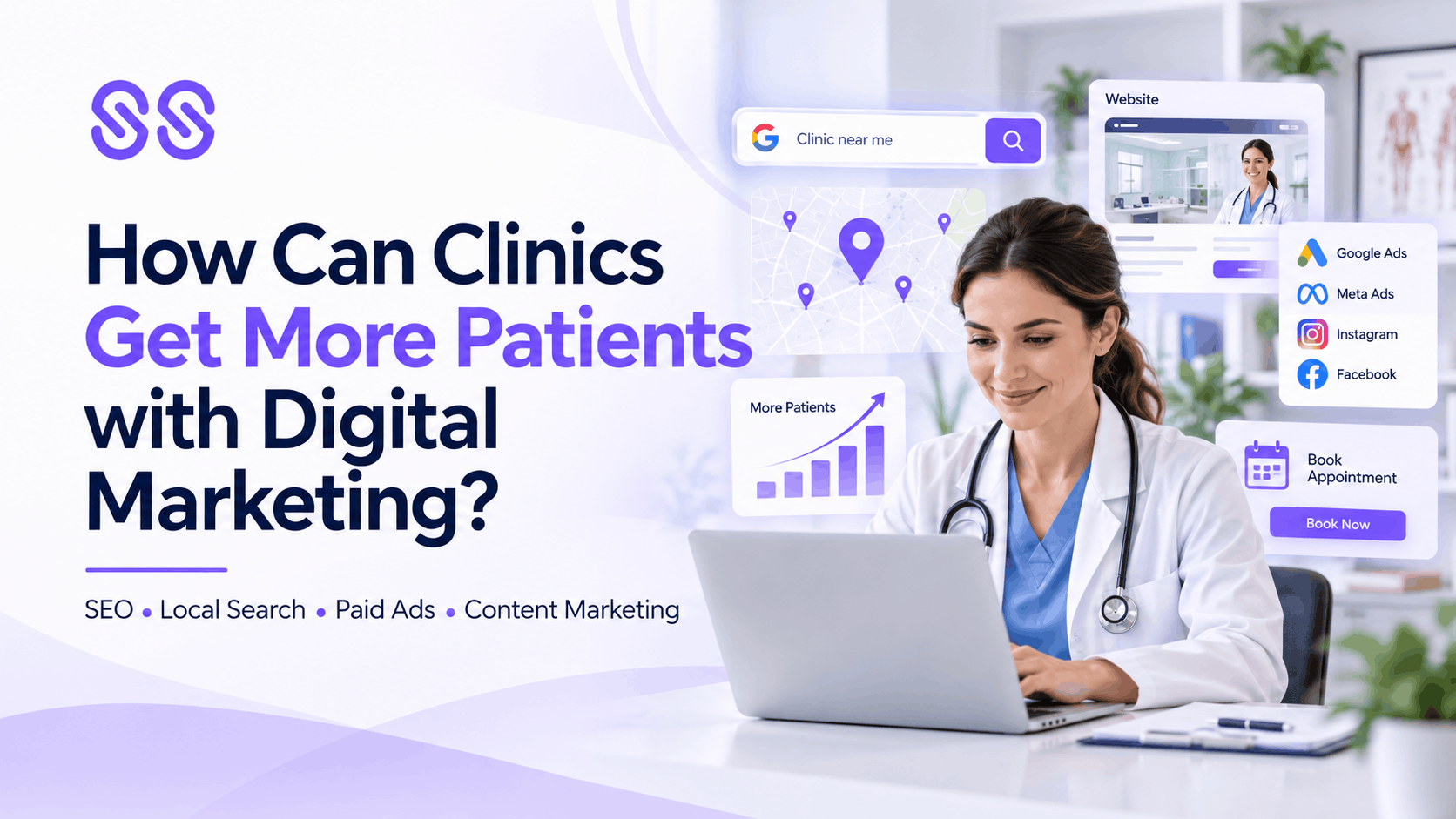
Attracting new patients is an ongoing challenge for clinics in an increasingly competitive healthcare market. Patients now use search engines, online reviews, clinic websites, and digital platforms to research healthcare providers before deciding where to book an appointment. For clinics that want to increase visibility and attract relevant enquiries, digital marketing has become an important part of sustainable growth.
However, getting more patients requires more than simply publishing social media posts or running online advertisements. Clinics need a coordinated strategy that helps potential patients discover their services, understand their treatment options, build confidence in their providers, and take the next step towards booking an appointment.
Effective digital marketing for clinics combines search engine optimisation (SEO), local search visibility, paid advertising, educational content, website optimisation, and a clear patient enquiry process. Each channel serves a different purpose, and the right mix depends on the clinic's specialty, location, competition, and growth objectives.
This guide explains how clinics can use clinic digital marketing to improve online visibility, reach relevant audiences, generate patient enquiries, and build a stronger digital presence.
Read more - How Plastic Surgeons Can Generate High-Value Leads with Google Ads
Why Digital Marketing Is Important for Clinics
A clinic may offer experienced medical professionals, convenient appointments, and a range of healthcare services, but prospective patients need to find and understand those services before they can consider booking.
Digital marketing helps clinics communicate their services across the online channels patients use during their search for healthcare information.
Patients Research Healthcare Providers Online
Patients may search for a doctor by specialty, look for a clinic nearby, compare service information, or read reviews before making an enquiry. If a clinic has limited online visibility or incomplete information, potential patients may have difficulty evaluating whether its services meet their needs.
A strong digital presence helps make essential information accessible, including available services, doctor profiles, location, opening hours, and appointment options.
Competition Extends Beyond the Local Area
Depending on the specialty, clinics may compete with nearby practices, larger healthcare groups, hospitals, and providers investing heavily in online marketing. A structured strategy can help a clinic communicate its specific services and establish relevance for searches associated with its location and expertise.
Digital Channels Support Measurable Marketing
Online campaigns can provide useful information about website traffic, search visibility, calls, form submissions, and appointment requests. When these metrics are tracked consistently, clinic owners can make better-informed decisions about marketing investment.
The goal should not be to generate the largest possible number of enquiries. It should be to attract relevant prospective patients and make it easier for them to access appropriate care.
1. Optimise Your Clinic Website to Convert Visitors into Patients
Your website is often one of the first places prospective patients visit after discovering your clinic. It should provide clear information, answer common questions, and make the appointment process straightforward.
Create Dedicated Pages for Each Service
A clinic that provides multiple treatments or medical services should avoid relying on a single general services page. Individual service pages allow visitors to find information relevant to their needs and help search engines understand the clinic's offerings.
For example, a dermatology clinic might create separate pages for acne treatment, pigmentation concerns, skin examinations, and other services it genuinely provides. A physiotherapy clinic may need individual pages for sports injuries, back pain, post-operative rehabilitation, and mobility support.
Each service page should explain what the service involves, who may benefit from an assessment, what patients can generally expect, and how to enquire about an appointment.
Improve Website Usability
A clinic website should work well on mobile devices and make important information easy to find. Contact details, doctor profiles, service descriptions, location information, and appointment options should be clearly accessible.
Review the website regularly for slow-loading pages, broken links, confusing navigation, and forms that do not work correctly.
Make Appointment Booking Simple
A visitor who is ready to enquire should not have to search extensively for a phone number or booking form. Use clear calls to action, such as “Book an Appointment” or “Contact the Clinic,” where appropriate.
Keep enquiry forms concise and avoid requesting unnecessary sensitive health information. Make sure patients understand what happens after submitting a request and how the clinic will respond.
2. Use Healthcare SEO to Attract Patients from Search Engines
Search engine optimisation helps clinics improve their visibility when people search for relevant medical services, treatments, and healthcare providers. A well-planned SEO strategy can support long-term discovery by people who are actively looking for the services a clinic offers.
Target High-Intent Keywords
Keyword research should focus on the services the clinic provides and the language potential patients use when searching for them.
Examples include:
- Dermatologist in [city]
- Physiotherapy clinic near me
- Dental clinic in [location]
- Skin treatment clinic in [city]
- Women's health clinic near me
- Specialist consultation in [city]
The appropriate keywords will vary by specialty and location. Clinics should prioritise terms that accurately reflect their services instead of targeting broad or unrelated phrases solely because they have high search volume.
Optimise Service Pages and Website Content
Each important page should have a descriptive title tag, a clear H1 heading, a logical H2 and H3 structure, a useful meta description, and relevant internal links.
Content should answer the questions prospective patients are likely to have. Avoid repetitive keyword placement, generic descriptions, and unsupported claims about treatment results.
Improve Technical SEO
Technical issues can prevent search engines from accessing or understanding website content. Clinics should review indexing, crawlability, mobile usability, page speed, broken links, duplicate content, XML sitemaps, and canonical tags.
Relevant structured data can also help search engines interpret information about the clinic, its website, and eligible services. Markup must accurately reflect visible page content and should not be used to make unsupported claims.
Publish Helpful Healthcare Content
Educational content can help clinics address common questions about symptoms, diagnostic procedures, treatments, preparation, and recovery.
Because healthcare information can influence personal decisions, articles should be accurate, appropriately reviewed, and clear about the limits of general information. Content should not promise outcomes or suggest that an online article can replace an individual clinical assessment.
Read More - SEO services for dentists in Dallas
3. Strengthen Local SEO to Reach Nearby Patients
For many clinics, local visibility is one of the most important parts of medical clinic marketing. People frequently search for healthcare services near their home, workplace, or current location.
Local SEO helps a clinic present accurate information when prospective patients search for relevant providers in the area.
Optimise Your Google Business Profile
A clinic's Google Business Profile should contain accurate business details, including its name, address, phone number, website, opening hours, and appropriate business categories.
Add relevant service information and genuine photographs where appropriate. Review the profile periodically to correct outdated details and ensure that patients can contact the clinic using the information provided.
Maintain Consistent Business Information
Inconsistent addresses, phone numbers, opening hours, and business names can confuse prospective patients. Keep these details accurate across the clinic website, Google Business Profile, and reputable local directories.
If the clinic relocates or changes its contact information, update relevant platforms promptly.
Build Useful Location-Based Pages
Clinics serving multiple genuine locations may benefit from separate pages that provide unique information about each facility. These pages can include directions, available services, location-specific contact information, accessibility details, and appointment procedures.
Avoid creating numerous nearly identical city pages where the clinic has no meaningful presence or service relevance. Location pages should help patients, not simply repeat keywords.
4. Use Paid Advertising to Generate Relevant Patient Enquiries
SEO supports long-term organic visibility, while paid advertising can help clinics reach people searching for specific services. Google Ads may be useful for capturing existing demand, provided campaigns are carefully planned and comply with applicable healthcare advertising policies.
Create Campaigns Around Specific Services
A clinic offering several services should consider organising campaigns by treatment or specialty. This makes it easier to match advertisements to search intent, manage budgets, and assess which services attract relevant enquiries.
For example, a physiotherapy clinic might run separate campaigns for sports injury rehabilitation and back pain services if both are offered and there is sufficient demand.
Send Visitors to Relevant Landing Pages
An advertisement promoting a particular service should direct visitors to a page that explains that service. Sending all visitors to the homepage can create unnecessary friction.
A focused landing page should explain the service, provide accurate information about the clinic and its professionals, and offer a clear way to enquire or book.
Track Enquiry Quality and Campaign Costs
Impressions and clicks indicate campaign activity, but they do not necessarily show whether the clinic is attracting appropriate patients.
Monitor qualified enquiries, appointment requests, cost per enquiry, conversion rates, and appointment outcomes where they can be measured appropriately. Use this information to refine campaign targeting and landing pages.
Clinics should also review applicable laws and advertising platform restrictions concerning medical claims, sensitive health information, remarketing, and audience targeting.
5. Build Trust Through Reviews and Online Reputation Management
Patients may consider online reviews when comparing healthcare providers. A consistent, professional approach to reputation management can help clinics communicate with patients and maintain accurate public information.
Encourage Genuine Patient Feedback
Clinics can invite patients to share honest feedback through appropriate channels, provided the process complies with applicable laws, professional rules, and platform policies.
Do not purchase reviews, create fabricated testimonials, or pressure patients to provide positive feedback. Reviews should reflect genuine experiences.
Respond Professionally to Reviews
Thank reviewers where appropriate and address concerns calmly. Avoid disclosing whether someone is a patient or revealing medical details in a public response.
If a review raises a concern about service quality, use suitable internal procedures to investigate it. Public replies should remain respectful and protect confidentiality.
Monitor Important Online Listings
Review the clinic's public business information periodically. Incorrect contact details, outdated photographs, and inaccurate opening hours can affect patient confidence even when the clinic's actual service quality is strong.
Reputation management should focus on accurate information, respectful communication, and genuine service improvement rather than simply pursuing a higher review score.
6. Use Content Marketing to Answer Patient Questions
Content marketing can help clinics provide useful information before prospective patients contact the practice. It also supports SEO by creating relevant resources around the clinic's services and areas of expertise.
Publish Articles Based on Patient Intent
Develop content around the questions people commonly ask before booking an appointment. Depending on the specialty, topics may include treatment options, what to expect during a consultation, preparation for a procedure, recovery guidance, and when to seek professional assessment.
For example, a dental clinic may publish an article explaining what happens during a routine dental examination. A physiotherapy practice might explain the general purpose of an initial assessment and how treatment plans can vary.
Demonstrate Relevant Professional Expertise
Doctor and clinician profiles should include accurate qualifications, specialties, relevant experience, and professional affiliations where applicable. Healthcare articles should identify authors and clinical reviewers when appropriate.
Avoid implying that a professional holds qualifications or certifications that have not been verified. Claims about experience, success rates, and treatment outcomes should be supported by reliable evidence.
Repurpose Content Across Suitable Channels
A useful article can inform a short educational video, a social media post, or a patient newsletter. Adapt the material to each channel while maintaining clinical accuracy and respecting privacy.
A consistent, high-quality content programme is generally more useful than publishing large volumes of repetitive material.
7. Use Social Media to Improve Awareness and Engagement
Social media can help clinics communicate their services, share educational information, introduce their team, and maintain visibility among local audiences.
However, social media should complement a broader clinic digital marketing strategy rather than replace a functional website, search visibility, or a reliable appointment process.
Share Useful and Relevant Content
Suitable posts may include general healthcare education, introductions to clinicians, clinic updates, explanations of available services, and practical appointment information.
Content should be appropriate for the clinic's specialty and audience. Avoid diagnosing individuals through comments or direct messages, and direct personal medical questions towards suitable clinical channels.
Use Video Where It Adds Value
Short videos can explain how appointments work, introduce a clinician, or answer general questions about a service. Videos should use clear language and avoid overstating benefits or promising specific results.
Review Engagement Against Business Goals
Likes and followers can indicate awareness, but they are not sufficient measures of patient acquisition. Track relevant website visits, enquiries, appointment requests, and other appropriate outcomes to understand whether social activity supports the clinic's objectives.
Any paid social campaigns should comply with platform-specific healthcare policies and relevant privacy regulations.
Read More - cosmetic surgery marketing los angeles
8. Improve Patient Acquisition with Better Follow-Up
Generating an enquiry is only one stage of the patient journey. A clinic also needs a consistent process for handling calls, responding to forms, and helping people understand the next step.
Establish a Clear Enquiry Process
Assign responsibility for reviewing incoming enquiries and responding within the clinic's defined service standards. Staff should be able to provide accurate administrative information and direct clinical questions to qualified professionals.
Where appointment availability changes frequently, ensure that booking information remains accurate.
Reduce Friction in Appointment Scheduling
Make it clear how patients can request an appointment, what information they need to provide, and how the clinic will confirm the booking.
Review recurring problems such as unanswered calls, incomplete forms, confusing booking steps, and outdated contact details.
Protect Patient Information
Clinics should use appropriate access controls and secure systems for handling patient enquiries. Marketing platforms and analytics tools should be configured in line with applicable privacy laws and platform policies.
Avoid sending identifiable patient health information to advertising platforms or using sensitive data for targeting without a lawful basis and explicit confirmation that the activity is permitted.
9. Measure the Performance of Your Clinic Digital Marketing
A clear reporting process helps clinic owners understand which activities are contributing to marketing goals and where improvements are needed.
Useful metrics include:
Organic search traffic measures visits generated through unpaid search results.
Local search visibility measures visibility for relevant searches in the clinic's service area.
Qualified enquiries measure enquiries that match the clinic's services and operational criteria.
Appointment requests measure requests to schedule consultations or services.
Cost per qualified enquiry measures marketing spend relative to relevant enquiries.
Landing page conversion rate measures the proportion of visitors who complete a defined action.
Call and form response time measures how efficiently the clinic handles incoming enquiries.
Appointment attendance measures the proportion of booked appointments attended, where measurable.
Establish a baseline before changing the strategy. Review performance over an appropriate period and account for factors such as seasonality, changes in appointment capacity, and differences between services.
Attribution is not always straightforward: a patient might discover a clinic through search, return through a direct visit, and later book after reading reviews. Reporting should acknowledge these limitations rather than attributing every appointment to a single channel.
10. Common Digital Marketing Mistakes Clinics Should Avoid
Even a well-funded marketing campaign can underperform when the underlying strategy is weak. Clinics should avoid:
- Relying entirely on paid advertising without developing organic visibility.
- Using one generic page to promote every service.
- Targeting keywords unrelated to the clinic's actual offerings.
- Publishing inaccurate or clinically unreviewed healthcare content.
- Ignoring local listings and outdated contact information.
- Measuring success only through clicks, impressions, or social media engagement.
- Making unsupported claims about clinical outcomes or professional superiority.
- Failing to respond consistently to genuine patient enquiries.
- Creating repetitive location pages without meaningful local information.
- Using patient information in ways that violate privacy requirements or platform policies.
Addressing these issues can make marketing more focused, measurable, and aligned with the clinic's operational needs.
Read More - seo for hair transplant clinics
11. Create a Practical Digital Marketing Plan for Your Clinic
Clinics do not need to launch every marketing activity at once. A phased approach can help prioritise improvements and establish a reliable foundation.
Phase 1: Review the Current Digital Presence
Audit the website, service pages, Google Business Profile, search visibility, advertising accounts, and enquiry process. Identify the services and locations that matter most to the clinic's growth objectives.
Phase 2: Fix Essential Website and Local SEO Issues
Improve key service pages, correct business information, resolve significant technical SEO issues, and make appointment options easier to find.
Set up appropriate conversion tracking before investing in additional campaigns.
Phase 3: Expand Relevant Visibility
Develop useful healthcare content, improve local search optimisation, and launch carefully targeted advertising where appropriate. Prioritise services that align with patient demand and the clinic's capacity.
Phase 4: Measure, Learn, and Improve
Review the quality of enquiries, appointment requests, campaign costs, and website performance. Identify where prospective patients experience friction and use the findings to improve targeting, content, and booking processes.
How Socialsect Can Help with Digital Marketing for Clinics
Socialsect supports healthcare businesses with digital strategies designed to improve online visibility and generate relevant enquiries. Depending on the clinic's needs, this can include healthcare SEO, technical website optimisation, local SEO, service-page development, content marketing, paid campaign planning, and conversion tracking.
The process begins by understanding the clinic's specialty, target locations, current digital performance, and business priorities. Marketing activities can then be organised around the services prospective patients are searching for and the actions the clinic wants them to take.
The focus is on building a clear digital presence, communicating services accurately, and improving the journey from online discovery to appointment enquiry.
Conclusion
Clinics can attract more relevant patient enquiries by building a strong website, improving healthcare SEO, strengthening local search visibility, using appropriate paid advertising, and publishing trustworthy educational content.
The most effective digital marketing for clinics connects these activities with a straightforward appointment process and reliable enquiry management. Rather than focusing solely on traffic or social media engagement, clinics should measure whether their marketing helps prospective patients discover suitable services and take the next appropriate step.
A consistent, data-informed strategy can help clinics strengthen their online presence and build a more sustainable approach to patient acquisition.