The cosmetic surgery industry has become increasingly competitive across the United States and United Kingdom. Patients considering procedures such as rhinoplasty, breast augmentation, facelifts, liposuction, and body contouring often spend weeks researching providers before scheduling a consultation.
While search engine optimization remains an important long-term strategy, many practices need immediate visibility among potential patients actively searching for cosmetic procedures. This is where Google Ads for plastic surgeons can become one of the most effective patient acquisition channels.
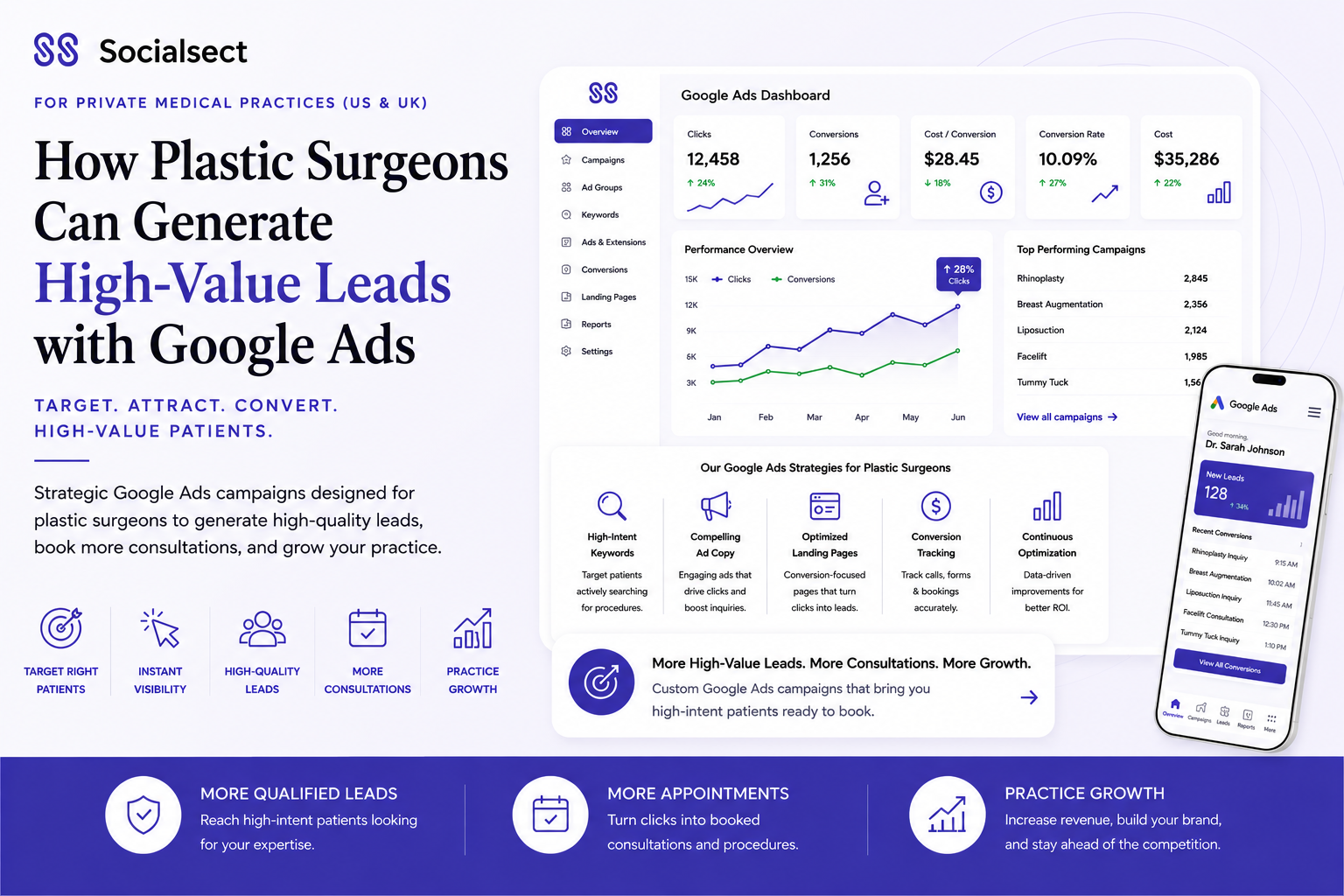
A well-managed Google Ads campaign allows plastic surgeons to appear at the top of search results when prospective patients are actively looking for treatment options. More importantly, it helps practices attract high-value leads—individuals who are genuinely interested in scheduling consultations and investing in elective procedures.
In this guide, we'll explore how plastic surgeons can use Google Ads strategically to increase qualified leads, improve conversion rates, and maximize marketing return on investment.
Why Google Ads Works for Plastic Surgeons
Plastic surgery is often a high-ticket service. Procedures can range from several thousand to tens of thousands of dollars, making every qualified lead extremely valuable.
Unlike traditional advertising methods, Google Ads targets users based on intent. When someone searches for:
- Best plastic surgeon near me
- Rhinoplasty surgeon in London
- Breast augmentation consultation
- Facelift specialist in New York
- Liposuction surgeon near me
they are already demonstrating interest in treatment.
This high-intent audience is why plastic surgery PPC campaigns often outperform many other forms of digital advertising when properly managed.
Understanding High-Value Leads in Plastic Surgery
Not every lead has the same value.
High-value leads typically:
- Have strong interest in a procedure
- Are financially prepared
- Are actively researching surgeons
- Have realistic treatment expectations
- Are likely to schedule consultations
The objective of plastic surgeon lead generation is not simply generating more inquiries. It is generating inquiries from patients most likely to convert into consultations and surgeries.
Start with Procedure-Specific Campaigns
One of the biggest mistakes plastic surgery practices make is running generic campaigns.
Instead of advertising "Plastic Surgery Services," create campaigns around individual procedures.
Examples include:
Facial Procedures
- Rhinoplasty
- Facelift
- Eyelid Surgery
- Chin Augmentation
- Neck Lift
Body Procedures
- Liposuction
- Tummy Tuck
- Mommy Makeover
- Body Contouring
Breast Procedures
- Breast Augmentation
- Breast Reduction
- Breast Lift
- Breast Revision
Procedure-specific campaigns improve relevance and usually produce better conversion rates.
Target High-Intent Keywords
Keyword selection is the foundation of successful cosmetic surgery Google Ads campaigns.
Focus on commercial-intent keywords rather than purely informational searches.
Examples include:
High-Intent Keywords
- Plastic surgeon near me
- Best rhinoplasty surgeon
- Breast augmentation consultation
- Facelift specialist
- Liposuction clinic
- Cosmetic surgery consultation
Local Intent Keywords
- Plastic surgeon in Los Angeles
- Rhinoplasty London
- Breast augmentation Manchester
- Facelift New York
These keywords typically attract users closer to making a treatment decision.
Use Geographic Targeting Strategically
Plastic surgery patients usually travel within a reasonable distance for consultations and procedures.
Google Ads allows practices to target:
- Specific cities
- Counties
- Postal codes
- Metropolitan areas
- Custom geographic radiuses
For example, a clinic in Miami can target:
- Miami
- Coral Gables
- Fort Lauderdale
- Boca Raton
- Palm Beach
Location-specific targeting reduces wasted ad spend and increases lead quality.
Create Conversion-Focused Ad Copy
Your ad copy must immediately communicate expertise, trust, and value.
Effective plastic surgery advertising often highlights:
Credentials
- Board Certified Surgeon
- Fellowship Trained Specialist
- Experienced Plastic Surgeon
Social Proof
- Thousands of Procedures Performed
- Five-Star Reviews
- Patient Success Stories
Calls to Action
- Schedule Consultation
- Book Your Assessment
- Request Pricing Information
- Speak With Our Team
Strong messaging improves click-through rates and increases qualified inquiries.
Build Dedicated Landing Pages
Many practices send ad traffic directly to their homepage.
This is a costly mistake.
Every Google Ads campaign should direct visitors to a dedicated landing page designed around a specific procedure.
An effective landing page includes:
Procedure Overview
Clearly explain:
- Treatment goals
- Benefits
- Recovery expectations
- Candidacy criteria
Surgeon Credentials
Demonstrate expertise through:
- Certifications
- Experience
- Professional memberships
- Awards
Patient Testimonials
Real patient experiences help establish trust and improve conversion rates.
Before-and-After Galleries
Visual proof remains one of the strongest conversion drivers in cosmetic surgery marketing.
Consultation Form
Make it easy for visitors to request appointments.
This approach significantly improves plastic surgeon lead generation performance.
Use Call Tracking and Conversion Tracking
Many prospective patients prefer calling rather than completing online forms.
Tracking systems should measure:
- Phone calls
- Consultation requests
- Contact form submissions
- Appointment bookings
- Virtual consultation requests
Without accurate tracking, it becomes impossible to determine which campaigns generate revenue.
Leverage Remarketing Campaigns
Most cosmetic surgery patients do not convert during their first website visit.
Research often takes weeks or months.
Remarketing allows practices to reconnect with previous visitors through:
- Display Ads
- Search Remarketing
- YouTube Ads
- Discovery Campaigns
These reminders help keep your clinic top-of-mind throughout the decision-making process.
Focus on EEAT to Improve Conversion Rates
Google prioritizes trust signals in healthcare-related advertising.
Strong EEAT (Experience, Expertise, Authoritativeness, and Trustworthiness) elements help both rankings and conversions.
Demonstrate Experience
Show:
- Years in practice
- Procedure volumes
- Clinical expertise
Highlight Qualifications
Include:
- Board certifications
- Fellowships
- Professional memberships
Build Authority
Feature:
- Published articles
- Media appearances
- Industry recognition
Increase Trust
Display:
- Reviews
- Testimonials
- Transparent consultation processes
- Clear contact information
Patients are more likely to book consultations when trust is established.
Optimize for Mobile Users
Many cosmetic surgery searches occur on mobile devices.
Your landing pages should offer:
- Fast loading times
- Mobile-friendly design
- Click-to-call buttons
- Easy appointment forms
- Simple navigation
Mobile optimization is essential for successful paid ads for plastic surgeons.
Incorporate AI Search and AEO Principles
Search behavior continues to evolve with AI-generated search experiences.
To improve AEO (Answer Engine Optimization) and AIO (AI Optimization), create landing pages that:
- Answer common patient questions
- Use structured headings
- Include FAQs
- Provide expert-backed information
- Present clear procedure explanations
This increases visibility across both traditional and AI-powered search platforms.
Use Google Ads Extensions
Ad extensions improve visibility and engagement.
Recommended extensions include:
Call Extensions
Allow users to contact your practice directly.
Location Extensions
Display clinic location and directions.
Sitelink Extensions
Promote:
- Consultation Page
- Before-and-After Gallery
- Financing Options
- Meet the Surgeon
Callout Extensions
Highlight:
- Board Certified
- Personalized Treatment Plans
- Flexible Financing
Extensions often improve click-through rates and lead quality.
Common Google Ads Mistakes Plastic Surgeons Should Avoid
Broad Keyword Targeting
Avoid attracting users searching unrelated information.
Sending Traffic to Homepages
Dedicated landing pages consistently outperform generic pages.
Ignoring Mobile Experience
Poor mobile usability reduces conversions.
Failing to Track Results
Data-driven optimization is critical.
Weak Follow-Up Processes
Quick response times significantly improve consultation booking rates.
Why Many Practices Work with Plastic Surgery Marketing Experts
Managing successful plastic surgery marketing campaigns requires expertise in:
- Healthcare advertising compliance
- PPC strategy
- Conversion optimization
- Landing page design
- Patient acquisition funnels
- Analytics and reporting
Experienced specialists can often reduce cost per lead while increasing consultation volume.
Conclusion
Google Ads remains one of the fastest and most effective ways for plastic surgeons to attract qualified, high-value patients.
By combining targeted keyword selection, procedure-specific campaigns, optimized landing pages, strong trust signals, and conversion tracking, practices can generate a steady stream of consultation requests from patients actively searching for cosmetic procedures.
For plastic surgeons looking to accelerate growth in competitive markets across the USA and UK, a well-executed Google Ads strategy can become a powerful driver of predictable and scalable patient acquisition.