A healthcare website can have excellent medical content and still struggle to rank, attract relevant visitors, or generate patient enquiries. In many cases, the problem is not one isolated SEO issue. It is the absence of a clear understanding of what needs to be fixed first and what needs to happen next.
This is where a medical SEO audit and a healthcare SEO strategy serve different purposes.
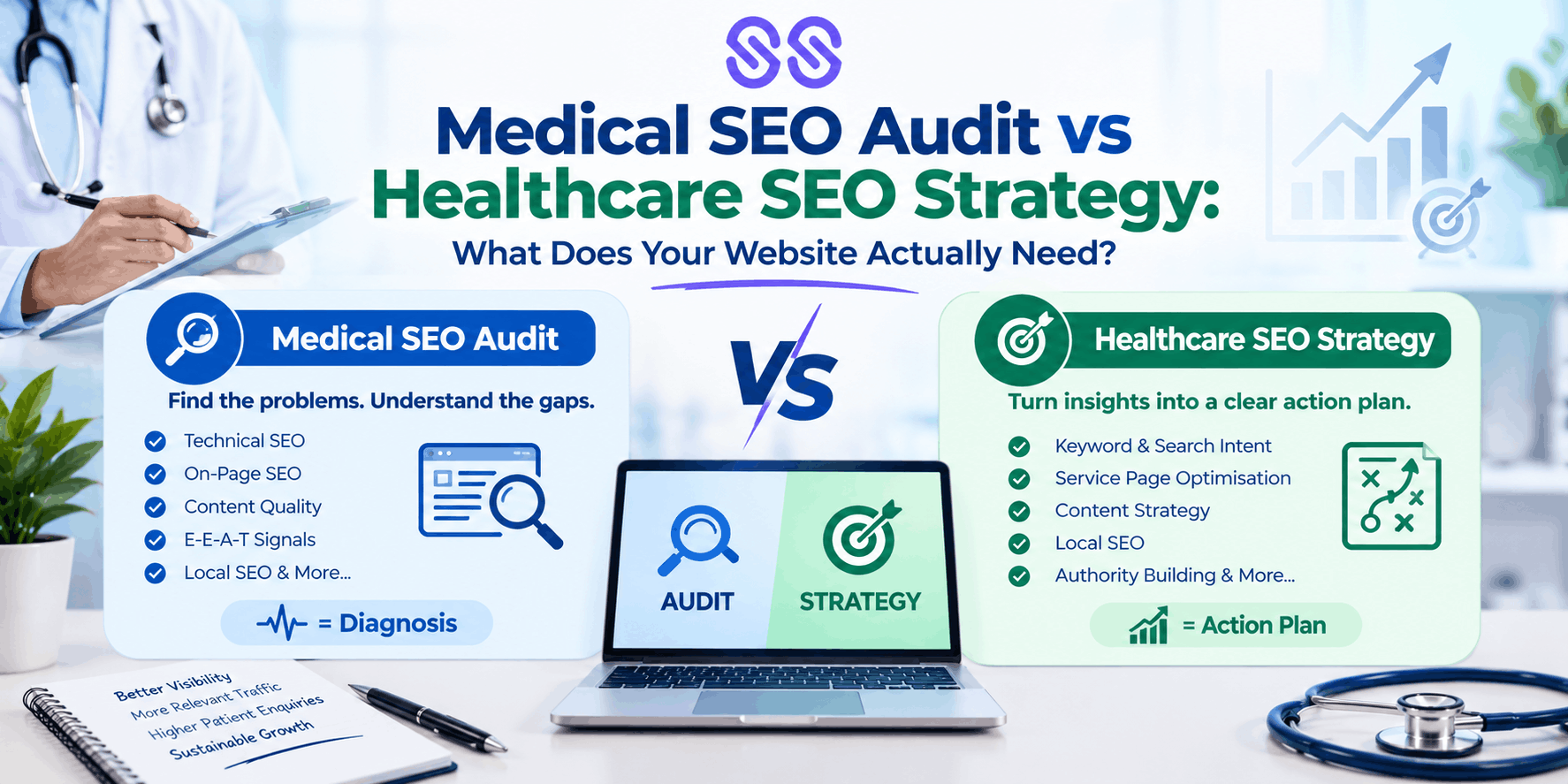
A medical SEO audit identifies problems, weaknesses, missed opportunities, and technical barriers affecting search performance. A healthcare SEO strategy turns those findings into a structured plan for improving visibility, attracting relevant patients, building topical authority, and supporting long-term growth.
The two should not be treated as competing alternatives.
For most established medical websites, the audit should be the starting point. The strategy then determines how the identified issues and opportunities should be addressed.
What Is a Medical SEO Audit?
A medical SEO audit is a structured evaluation of a healthcare website's search performance and SEO health.
It looks at the factors that can affect how effectively search engines discover, understand, index, and rank the website.
A comprehensive medical SEO audit may examine:
- Technical SEO
- Website architecture
- Indexing
- Crawlability
- Page speed and performance
- Mobile usability
- Metadata
- Headings
- Internal linking
- Service pages
- Location pages
- Doctor profiles
- Healthcare content
- Search intent
- Keyword targeting
- Duplicate or thin content
- Broken links
- Redirects
- Canonicalisation
- XML sitemaps
- Local SEO
- Backlinks
- E-E-A-T signals
- Conversion paths
The purpose is not simply to produce a long list of SEO errors.
A useful audit should explain what is wrong, why it matters, how serious the issue is, and what should be done about it.
What Is a Healthcare SEO Strategy?
A healthcare SEO strategy is the broader plan for achieving organic search and patient-acquisition objectives.
Instead of asking only:
“What is wrong with this website?”
a strategy asks:
“What should we do to improve this website's search visibility and business outcomes over time?”
A healthcare SEO strategy can include:
- Keyword and search-intent research
- Competitor analysis
- Technical SEO priorities
- Service-page optimisation
- Content strategy
- Topic clusters
- Internal linking
- Local SEO
- Doctor and practitioner optimisation
- Digital PR and authority building
- Conversion optimisation
- Measurement and reporting
- AI search and answer-engine considerations
In other words, the audit diagnoses the current situation, while the strategy establishes the path forward.
Medical SEO Audit vs Healthcare SEO Strategy: The Key Difference
The simplest distinction is:
Medical SEO Audit = Diagnosis
Healthcare SEO Strategy = Action Plan
An audit may tell you that your important service pages are not targeting appropriate search intent.
A strategy determines:
- Which services should be prioritised
- Which keywords to target
- How the pages should be improved
- What supporting content should be created
- How pages should be internally linked
- How performance will be measured
An audit is therefore highly valuable, but an audit by itself does not create sustainable SEO growth.
What Does a Medical SEO Audit Typically Check?
Technical SEO
Technical health provides the foundation for search visibility.
An audit should investigate issues such as:
- Indexing problems
- Crawlability
- Robots directives
- XML sitemaps
- Canonical tags
- Redirect chains
- Broken URLs
- Duplicate pages
- Site architecture
- Mobile usability
- Core page-performance issues
Technical problems can prevent important pages from being discovered or understood effectively.
On-Page SEO
The audit should review how individual pages communicate their topic and purpose.
This can include:
- Title tags
- Meta descriptions
- H1 and heading structure
- URL structure
- Content relevance
- Keyword targeting
- Internal links
- Image optimisation
- Search intent alignment
The goal is not to insert keywords repeatedly. It is to make each page genuinely useful and clearly aligned with what the searcher is looking for.
Content Quality
Healthcare content requires particular care.
A medical SEO audit should examine whether content is:
- Accurate
- Useful
- Up to date
- Clearly written
- Relevant to the intended audience
- Supported by appropriate expertise
- Properly attributed where necessary
Content should not make unsupported medical claims or present general information as individual medical advice.
E-E-A-T Signals
Healthcare websites benefit from demonstrating genuine experience, expertise, authoritativeness, and trustworthiness.
An audit may review:
- Doctor profiles
- Professional qualifications
- Author information
- Medical review information where appropriate
- Professional affiliations
- References and sources
- Practice information
- Contact details
- Transparency around services
These signals should reflect reality. Medical websites should never manufacture credentials, patient experiences, reviews, or clinical outcomes for SEO purposes.
What Does a Healthcare SEO Strategy Include?
Once the audit identifies the website's current condition, the strategy turns those findings into priorities.
Keyword Strategy
A healthcare SEO strategy should identify keywords based on:
- Search intent
- Service relevance
- Geographic relevance
- Search demand
- Competition
- Business value
For example, informational searches such as:
“What causes shoulder pain?”
serve a different purpose from:
“shoulder specialist near me.”
Both can have value, but they belong to different stages of the patient journey.
Service-Page Strategy
Core service pages should receive significant attention because they can target high-intent searches.
A strategy may identify opportunities for:
- Treatment pages
- Procedure pages
- Condition pages
- Specialist pages
- Consultation pages
- Location-specific service pages
The objective is to create useful pages that meet patient needs rather than produce pages simply to target additional keywords.
Content Strategy
Supporting healthcare content can build topical depth and help answer genuine patient questions.
For example, an orthopaedic website might create content covering:
- Common conditions
- Symptoms
- Treatment options
- Recovery considerations
- When to seek professional advice
- Frequently asked questions
This content can then support relevant service and specialist pages through thoughtful internal linking.
When Does Your Website Need a Medical SEO Audit?
An audit is particularly useful when you are experiencing unexplained SEO problems.
Consider an audit if:
Your Rankings Have Declined
A significant ranking drop can have many possible causes, including technical changes, content issues, algorithmic changes, competition, or website migrations.
Organic Traffic Is Falling
Traffic declines should be investigated rather than automatically addressed by publishing more content.
Your Website Has Recently Been Redesigned
Website migrations can create problems involving URLs, redirects, indexing, internal links, metadata, and content.
You Are Getting Traffic but Few Leads
This may indicate a mismatch between search intent, landing pages, user experience, and conversion paths.
You Are Planning a New SEO Campaign
An audit can establish a baseline and identify the highest-priority opportunities before ongoing optimisation begins.
When Does Your Website Need a Healthcare SEO Strategy?
A strategy becomes particularly important when you want consistent organic growth rather than one-time fixes.
You likely need a broader strategy if:
- You want to increase qualified organic leads
- You are entering new locations
- You are launching new medical services
- Competitors are consistently outranking you
- Your content lacks structure
- You have many services but no clear keyword architecture
- Your website has traffic but weak patient acquisition
- You want to build long-term topical authority
- You need an ongoing content and technical SEO roadmap
An audit tells you where you stand. A strategy tells you how to move forward.
Can You Have a Healthcare SEO Strategy Without an Audit?
You can, but starting without understanding the website's existing problems creates unnecessary risk.
For example, an SEO strategy might recommend publishing 20 new articles.
But if the website has serious indexing problems, those articles may not deliver their intended value.
Similarly, a strategy may recommend creating new location pages while existing location pages contain duplicate or thin content.
A technical and content baseline makes strategic planning more informed.
Can a Medical SEO Audit Improve Rankings by Itself?
An audit does not improve rankings simply because it has been completed.
The value comes from implementing the recommendations.
For example, an audit may identify:
Problem: Important service pages are poorly internally linked.
Impact: Search engines and users may have difficulty discovering the pages.
Solution: Improve internal linking from relevant authoritative pages and supporting content.
The same principle applies to technical issues, content gaps, metadata, local SEO and conversion problems.
The audit is the diagnosis; implementation is what creates change.
How to Prioritise Findings From a Medical SEO Audit
Not every SEO issue deserves immediate attention.
A useful prioritisation framework considers:
Impact × Urgency × Effort
High-Impact Issues
These may include:
- Important pages not being indexed
- Incorrect redirects
- Major technical barriers
- Lost URLs after migration
- Critical service pages targeting the wrong intent
Medium-Priority Opportunities
Examples can include:
- Improving internal linking
- Updating outdated content
- Optimising metadata
- Strengthening practitioner pages
- Expanding useful service content
Lower-Priority Improvements
These might include minor metadata refinements or cosmetic issues that have little impact on organic performance.
This approach helps healthcare teams focus resources where they are most likely to matter.
How E-E-A-T Fits Into Both Approaches
E-E-A-T should not be treated as a checkbox added to the end of an SEO campaign.
It should influence both the audit and the strategy.
During an audit, evaluate whether the website clearly communicates genuine expertise and trust.
During strategy development, determine how those qualities can be strengthened through:
- Better practitioner profiles
- Accurate authorship
- Appropriate medical review processes
- Evidence-based content
- Relevant professional information
- Transparent practice details
- High-quality patient education
For healthcare websites, credibility should be built through real expertise rather than marketing claims.
How to Measure the Success of Your Healthcare SEO Strategy
Once recommendations are implemented, measurement becomes essential.
Track metrics such as:
- Organic impressions
- Organic clicks
- Non-brand traffic
- Ranking keywords
- Service-page visibility
- Local search visibility
- Organic enquiries
- Phone calls
- Appointment requests
- Qualified leads
- Organic conversion rate
Ultimately, the most useful measurement framework is:
Visibility → Relevant Traffic → Enquiries → Qualified Leads → Appointments → Patients
Rankings are useful indicators, but they are not the final business objective.
Should You Get an Audit or Hire an SEO Agency?
This depends on your situation.
If you only want to understand what is wrong with your website, a focused medical SEO audit may be the appropriate first step.
If you want ongoing growth, implementation, content development, technical optimisation, local SEO, and performance measurement, you need a broader healthcare SEO strategy.
For many practices, the strongest approach is:
Audit → Prioritisation → Strategy → Implementation → Measurement → Continuous Optimisation
This creates a structured process instead of treating SEO as a collection of disconnected tasks.
Final Thoughts
A medical SEO audit and a healthcare SEO strategy are not substitutes for one another.
The audit helps you understand the current condition of your website. It identifies technical issues, content weaknesses, search-intent gaps, authority opportunities, and potential conversion problems.
The strategy takes those findings and turns them into a practical roadmap for sustainable organic growth.
If your website has never undergone a proper SEO review, start with an audit. If you already understand the major problems and want to increase visibility, qualified traffic, and patient acquisition, build a comprehensive healthcare SEO strategy around those findings.
The most effective approach is not simply to find more SEO errors or publish more content.
It is to identify the issues that matter, prioritise them based on business impact, implement improvements carefully, and measure whether those changes are helping the right patients discover and engage with your practice.